cape listings
Pieter Hugo
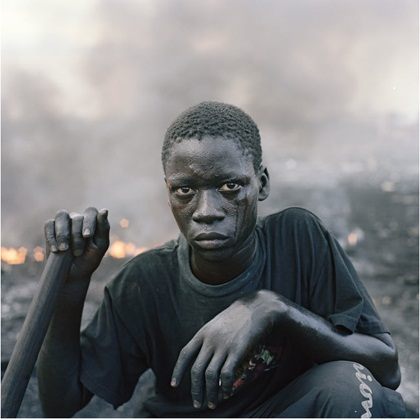
Abdulai Yahaya, Agbogbloshie Market, Accra, Ghana,
2010.
C-print
82 x 82 cm and 152.6 x 152.6 cm.
'Permanent Error'
Pieter Hugo at STEVENSON in Cape Town
For the past year Hugo has been photographing the people and landscape of an expansive dump of obsolete technology in Ghana. The area, on the outskirts of a slum known as Agbogbloshie, is referred to by local inhabitants as Sodom and Gomorrah, a vivid acknowledgment of the profound inhumanity of the place. When Hugo asked the inhabitants what they called the pit where the burning takes place, they repeatedly responded: 'For this place, we have no name'.
Their response is a reminder of the alien circumstances that are imposed on marginal communities of the world by the West's obsession with consumption and obsolesce. This wasteland, where people and cattle live on mountains of motherboards, monitors and discarded hard drives, is far removed from the benefits accorded by the unrelenting advances of technology.
29 July - 04 September
also showing
Pieter Hugo
26. Untitled, Agbogbloshie Market, Accra, Ghana 2010,
2010;
C-print
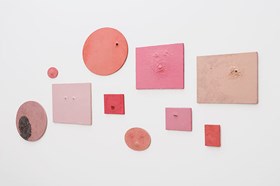
Pieter Hugo, Dineo Seshee Bopape, Dominique Gonzalez-Foerster, Kemi Odulana
Unknown
Pieter Hugo: Permanent Error
In this new body of work Pieter Hugo shows photographs taken in Ghana over the past year focussing on an expansive dump of obsolete technology on the outskirts of a slum known as Agbogbloshie. Every year millions of tons of digital waste is shipped to developing countries, supposedly to reduce the digital divide. In reality much of this is stripped and burnt to recover metals used in the manufacture of digital components, in the process polluting and contaminating natural resources. The resulting wasteland, inhabited by people and cattle subsisting amongst piles of technological detritus, offers a disturbing comment on the effect of affluent westernised countries on marginal communities. Exhibited alongside Hugo's photographs will be a multiscreen installation of filmed footage presented on old television sets.
Dineo Seshee Bopape: the eclipse will not be visible to the naked eye
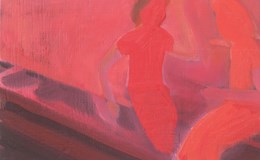
Known for her cluttered installations of found objects and playful, experimental video pieces Dineo Bopape's work draws on the sense of magic and mystery generated through the transformation of the ordinary and familiar into the disarmingly unknown. Her installations in particular evoke, through lively colourful association, the informal structures at the edge of the central economy, from the townships of South Africa to the alternative community of Christiania in Copenhagen. In this exhibition Bopape presents new video work installed within a 'video garden' along with a series of prints, which pay homage to Bopape's place of birth, Polokwane, but also show her struggle to reconnect to the local landscape after years abroad.
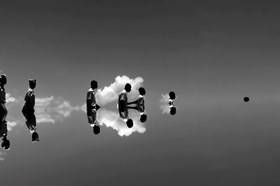
Dominique Gonzalez-Foerster: Noreturn
'Noreturn' was shot amidst Gonzalez-Foerster's installation 'TH 2058', a commission for the Turbine Hall at Tate Modern, London, in 2008. Like many of the artist's works, this installation references the science-fiction stories of such writers as JG Ballard and Philip K Dick, imagining a city of the near future in which the incessant rain has caused the public sculptures to grow to monumental proportions. These giant artworks are sheltered in the Turbine Hall along with hundreds of bunk-beds for the human refugees from the rain. In the film a group of schoolchildren enter the exhibition and gradually the atmosphere changes into something quietly unsettling and quite different.
Kemi Odualana: Drawings
Young american artist Kemi Odulana presents a series of drawings.
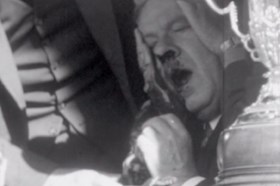
Dineo Seshee Bopape
The eclipse will not be visible to the naked eye,
2009;
Video still
'the eclipse will not be visible to the naked eye'
Dineo Seshee Bopape
Bopape is known for her playful, experimental video works and cluttered installations of found objects. These delve into the magic and mysteries of the metaphysical realm and disrupt our understanding of time and space. Her videos have the potential to leave one in a rhythmic trance as the mind is transported to distant illusionary worlds. Her installations, which often incorporate videos, bear a non-linear, colourful and lively resemblance to informal structures created on the fringes of the world economy, such as the alternative community of Christiania in Copenhagen and the townships of South Africa.
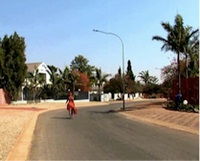
Works on exhibition include the video the eclipse will not be visible to the naked eye (2009), which pays homage to Bopape's place of birth, Polokwane, but shows her struggle reconnecting to the local landscape after years abroad. Occuping an entire room, an installation also titled the eclipse will not be visible to the naked eye comprises what Bopape calls a 'video garden', incorporating four recent video works as well as numerous sculptural elements and digital prints.