Towards a New Visual Language …
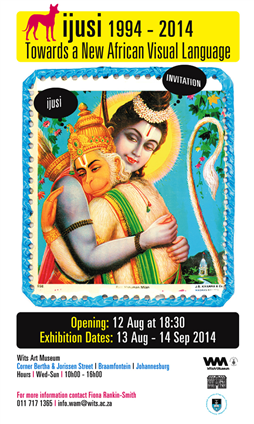
iJusi at Wits Art MuseumIjusi is an experimental magazine first published in the early years following South Africa’s first democratic elections circa 1994. From the beginning ijusi posed an important question: “What makes me South African, and what does that ‘look’ like?”, gradually piecing together the various cultural dichotomies and social potentialities that have evolved following Apartheid’s demise. As was the case with the Soviet Union in 1917, a new social order begets a new visual order.
Garth Walker released the first issue of ijusi in early 1995 from his studio in Durban; then called Orange Juice design. From its onset ijusi effectively showcased a burgeoning South African visual culture, which has come to be recognized for its quality in diversity worldwide. Over the following years, subsequent issues have made invaluable contributions to the ongoing discourse surrounding representation and identity in South Africa, specifically within the context of Graphic Design, Illustration, Typography, Writing, and Photography. Ijusi is currently self-published by Walker in a small print run, roughly twice yearly from his Durban based graphic design studio called Mister Walker.
Despite having a print-run in the low hundreds, ijusi has developed a worldwide following, making it a much sort after publication. Resultantly, the magazine has reached cult status, largely due to its rarity and the fact that it has never been commercially for sale, and handed-out for free to anybody who sees value in the publications mission. The fact that ijusi is Africa’s only experimental graphics magazine may also facto into its popularity amongst collectors.
To ensure the survival of the magazine, ijusi magazine formed a collaboration with the Rooke Gallery, launching the limited edition ijusi Portfolio No.1 in early 2010, and most recently Portfolio No.2 in late 2011. Comprising ten quality printed lithographs, both portfolios showcase key works by selected artists taken from the first twenty-four issues of the magazine. The success of the portfolios is proven by the fact that they have been acquired by a number of leading art museums and private collectors worldwide.
Moving into its second decade, the ijusi magazines, accompanied by the portfolios, can be seen as a historic series of documents, testaments to a developing country dealing with various socio-economic stratifications and political dimensions. Even though ijusi is often satirical and parodic in approach, it is important to note that the publication has never been a negative or even critical visual commentary on South Africa, rather trying to emphasize a platform for discovery, safeguarding the wealth of talent, rich traditions, and strong sense of heritage in South Afirca, with its diverse cultural backgrounds, each with their own contribution to make, exposing a creative poignancy and visual vocabulary that remains unrivaled.
13 August - 14 September