cape reviews
Booty
Julia Rosa Clark at Whatiftheworld / Gallery
By Bielle Ross19 April - 26 May. 0 Comment(s)
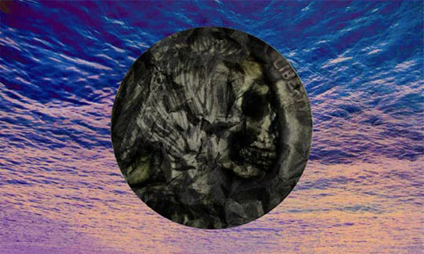
Julia Rosa Clark
The Black Spot,
2012.
Collage from found images
.
Accumulo ergo sum. It seems silly to point out the obvious, but in today’s social terrain, where any sense of the fixity of meaning has long since been obliterated, there remain imaginary anchors which weight our selecting, discarding, borrowing, appropriating, layering, deconstructing of the visual. 'Booty', an exhibition of what can best be described as a cacophony of encrusted collages, employs and valorises such semiotic voyages – and in fact, adds a few to the fray for good measure. Julia Rosa Clark’s ensembles, presented in her recently opened solo show at Whatiftheworld gallery, explore the realms of colonial appropriation, history, memory and representation. At the same time however, Clark manages to steer an idiosyncratic path, exhibiting her own agency and position when encountering these broad themes, using chance and contingency to unsettle such notions.
art events calendar
VIEW FULL CALENDAR
buy art prints

edition of 60: R8,000.00
About Editions for ArtThrob
Outstanding prints by top South African artists. Your chance to purchase SA art at affordable prices.
FIND OUT MORE Editions for artthrob
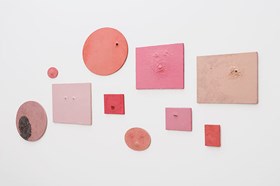
The artist encapsulates these foci though a combination of pulsating constellations incorporating found and carefully produced imagery, blazes of colour, phosphenes, golden nuggets of imagination, bibelots, and recollections where, much like the recurring teardrop motif in Clark’s work, ideas cling to the picture surfaces while subject to the gravitational force of the other artworks in the gallery.
Despite Clark’s titillating and almost scientific use of colour, shadows ooze from under the artist’s layers of card, net, cellophane and crumpled metallic paper. Throughout Clark’s compositions, this is where the eye tends to rest: at the slightly curled corners, on the faintly buckled planes of colour, on the ripples in the picture surfaces which, unmediated by glass, call attention to the implicit artifice and fragility and assemblage in art and history.
In terms of traversing the exhibition itself, the curatorial pull of a cyclical continuum is hard to resist, beginning with Inheritance (Between the Devil and the Deep Blue Sea) (2012). Clark’s process and primary medium, the conscientious collage, which could be read as dadaesque, is particularly well suited to her artistic gambit. Each composition’s sedimentary quality layers the continual reprocessing of information, materialising the ways in which knowledge and power, specifically within the colonial subtext, are inextricably interwoven. Clark pins, lifts, sticks, removes and replaces both consciously and more haphazardly, a tension reflected most aptly in The Orientalist (2012). Here, through the repetition and layering of images of oriental rugs, interrupted only by a fistful of phosphene-like shapes, a slab of sky blue and a putative chain of being, the artist creates a tapestry of assumptions essential to Western perceptions of 'the Orient' (in the broadest sense where meaning lies in a colonially contrived set of ideas and inferences).
In Coordinates of Gains & Sorrows (2012), disks cropped from found images representing time, direction, history and chemistry, are mapped into place. Positioned within the confines of the cartographic precinct, the composition reflects other topographical makeups such as language and politics. Apprehend (2012), an apple green fishing net (or is it a butterfly net?) literally holds a cluster of paper cutouts. Poised against the wall, the net simultaneously offers its contents up and keeps them detained.
The visitor is able to ascend for a brief sojourn onto the gallery mezzanine, where artworks such as The Stash (2012) – a cloud of collaged signifiers set on a lustrous scarlet plane – and Trade Routes (Redemption Song) (2012) are grouped. There is a strong sense that the power of Clark’s work is located in the interstices, between various visual nuggets of information. In that sense, Clark has deftly fashioned forces and tensions through the sometimes strategic and sometimes accidental placement, cropping, and re-contextualization of images.
Clark’s exhibition ends with White Flag (Squall) (2012), which again (dis)orders people, cultures, history and time onto one planar composition. A sea of masculine faces and scenes cut from outmoded books vie for the spectator’s attention. The force of the work is capped by an orange slab, referencing apartheid’s Nationalist Party flag and its particular brand of social hierarchy.
Wherever one stands in the exhibition, one feels the magnetic pull of Clark’s nucleus installation, Exchange/Gift/Theft (2012): a three-dimensional picnic composition of carefully selected and displayed objects. Clark combines typically 'feminine' objects, such as basketry, needlework, music and florid colours, with fake wounds, vampire teeth, a couple of token phallic bananas and a set of theatrical bulging eyeballs inter alia. Here, an analogy can be drawn between the oftentimes imperceptible and yet pervasive collections of 'things' guiding many social formations; and the sense of agency that Clark seems to advocate in which we curate ourselves through our collections of references and appropriations.
As the eye pans in and out of Clark’s clusters, the artist’s very own form of pictorial and curatorial pointillism emerges. From the verve of colours and shadows, to the mythical and iconographical properties, it becomes apparent that Clark’s web of references lies betwixt and between the artworks. ‘Take heed,’ Clark’s text collage accompanying the exhibition warns us: pay attention to the ‘in betweens’, ‘the jewels’, ‘the scars’. The artist’s material and psychogeographic Journey (2012) indeed presents ‘The blizzard of the world…’ reminding us of where ‘we’re all bound to go.’
Bielle Ross is currently pursuing her Honours degree in Art History at the University of Cape Town.