



Current Review(s)
The Amani Arts Festival 2010
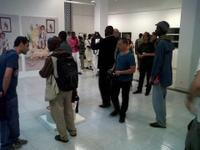
Various Participants at Lookout Hill
Community projects in South Africa are difficult, possibly more so than anywhere else. With our particular history of colonial appropriation, missionary arts education and continuing problematic labeling, as well as the marketing and exhibition of ‘township art’ for a mawkish tourist market, many in the arts-educated community are just too scared to get involved, paralyzed by the (not entirely unfounded) fear of being just another outsider telling a community what they need and how they should make art.
Art activist and performance poet Suzy Bell, however, has never been one of those people, and when group of Somalian men were kidnapped in Khayelitsha earlier this year, suggesting that the nation is once again facing an uprising of xenophobic sentiment, she made the decision to do something. She initiated a process of discussion, discovery and collaboration, which led to the Amani Arts Festival, a multidisciplinary arts and performance event which took place on October 30th at Lookout Hil Centre, Khayelitsha.
30 October 2010 - 30 October 2010
Alias - Photomonth Krakow 2011
Various Participants at Various venues around KrakowYou know how the art world works. You walk into a show and unless the artist concerned is exhibiting for the first time ever, you are already familiar with the name, the reputation, and something of the artist’s previous work, and you bring all this knowledge to bear when looking at this new display. You may even be aware of the artist’s precise position in the precarious hierarchy of critical acclaim, and also in which important collections the artist’s work is held.
All of this carefully acquired information is very helpful when forming an opinion of the new exhibition. It also acts as a comforting buffer against looking foolish when another viewer asks you if you think the work is good, or, perhaps… So how does one react when one enters an exhibition space and hears one of the curators declaim ‘None of the artists in this exhibition exist. All of the works are copies’ ?
South African born, London based photographers Adam Broomberg and Oliver Chanarin came up with the theme of ‘Alias’ when invited to curate Krakow Photomonth 2011, and in so doing made a radical departure from previous editions of the event which divided the main programme into blocks by topic and nationality.
For the central exhibition of ‘Alias’, held in the Bunker Sztuki gallery, the curators hunted down work already made under pseudonyms by artists, including Marcel Duchamp as Rrose Sélavy, Andrew Moletse (readers might remember work by this fictional character being included in the Standard Bank Drawing Competition of 1991) and William Kentridge, who appears in a short film in which three irritable versions of himself pick up horns and blow a cacophonous chorus.
13 May 2011 - 12 June 2011
Alias - Photomonth Krakow 2011
Various Participants at Various venues around KrakowYou know how the art world works. You walk into a show and unless the artist concerned is exhibiting for the first time ever, you are already familiar with the name, the reputation, and something of the artist’s previous work, and you bring all this knowledge to bear when looking at this new display. You may even be aware of the artist’s precise position in the precarious hierarchy of critical acclaim, and also in which important collections the artist’s work is held.
All of this carefully acquired information is very helpful when forming an opinion of the new exhibition. It also acts as a comforting buffer against looking foolish when another viewer asks you if you think the work is good, or, perhaps… So how does one react when one enters an exhibition space and hears one of the curators declaim ‘None of the artists in this exhibition exist. All of the works are copies’ ?
South African born, London based photographers Adam Broomberg and Oliver Chanarin came up with the theme of ‘Alias’ when invited to curate Krakow Photomonth 2011, and in so doing made a radical departure from previous editions of the event which divided the main programme into blocks by topic and nationality.
For the central exhibition of ‘Alias’, held in the Bunker Sztuki gallery, the curators hunted down work already made under pseudonyms by artists, including Marcel Duchamp as Rrose Sélavy, Andrew Moletse (readers might remember work by this fictional character being included in the Standard Bank Drawing Competition of 1991) and William Kentridge, who appears in a short film in which three irritable versions of himself pick up horns and blow a cacophonous chorus.
13 May 2011 - 12 June 2011
Alias - Photomonth Krakow 2011
Various Participants at Various venues around KrakowYou know how the art world works. You walk into a show and unless the artist concerned is exhibiting for the first time ever, you are already familiar with the name, the reputation, and something of the artist’s previous work, and you bring all this knowledge to bear when looking at this new display. You may even be aware of the artist’s precise position in the precarious hierarchy of critical acclaim, and also in which important collections the artist’s work is held.
All of this carefully acquired information is very helpful when forming an opinion of the new exhibition. It also acts as a comforting buffer against looking foolish when another viewer asks you if you think the work is good, or, perhaps… So how does one react when one enters an exhibition space and hears one of the curators declaim ‘None of the artists in this exhibition exist. All of the works are copies’ ?
South African born, London based photographers Adam Broomberg and Oliver Chanarin came up with the theme of ‘Alias’ when invited to curate Krakow Photomonth 2011, and in so doing made a radical departure from previous editions of the event which divided the main programme into blocks by topic and nationality.
For the central exhibition of ‘Alias’, held in the Bunker Sztuki gallery, the curators hunted down work already made under pseudonyms by artists, including Marcel Duchamp as Rrose Sélavy, Andrew Moletse (readers might remember work by this fictional character being included in the Standard Bank Drawing Competition of 1991) and William Kentridge, who appears in a short film in which three irritable versions of himself pick up horns and blow a cacophonous chorus.
13 May 2011 - 12 June 2011
Alias - Photomonth Krakow 2011
Various Participants at Various venues around KrakowYou know how the art world works. You walk into a show and unless the artist concerned is exhibiting for the first time ever, you are already familiar with the name, the reputation, and something of the artist’s previous work, and you bring all this knowledge to bear when looking at this new display. You may even be aware of the artist’s precise position in the precarious hierarchy of critical acclaim, and also in which important collections the artist’s work is held.
All of this carefully acquired information is very helpful when forming an opinion of the new exhibition. It also acts as a comforting buffer against looking foolish when another viewer asks you if you think the work is good, or, perhaps… So how does one react when one enters an exhibition space and hears one of the curators declaim ‘None of the artists in this exhibition exist. All of the works are copies’ ?
South African born, London based photographers Adam Broomberg and Oliver Chanarin came up with the theme of ‘Alias’ when invited to curate Krakow Photomonth 2011, and in so doing made a radical departure from previous editions of the event which divided the main programme into blocks by topic and nationality.
For the central exhibition of ‘Alias’, held in the Bunker Sztuki gallery, the curators hunted down work already made under pseudonyms by artists, including Marcel Duchamp as Rrose Sélavy, Andrew Moletse (readers might remember work by this fictional character being included in the Standard Bank Drawing Competition of 1991) and William Kentridge, who appears in a short film in which three irritable versions of himself pick up horns and blow a cacophonous chorus.
13 May 2011 - 12 June 2011
Alias - Photomonth Krakow 2011
Various Participants at Various venues around KrakowYou know how the art world works. You walk into a show and unless the artist concerned is exhibiting for the first time ever, you are already familiar with the name, the reputation, and something of the artist’s previous work, and you bring all this knowledge to bear when looking at this new display. You may even be aware of the artist’s precise position in the precarious hierarchy of critical acclaim, and also in which important collections the artist’s work is held.
All of this carefully acquired information is very helpful when forming an opinion of the new exhibition. It also acts as a comforting buffer against looking foolish when another viewer asks you if you think the work is good, or, perhaps… So how does one react when one enters an exhibition space and hears one of the curators declaim ‘None of the artists in this exhibition exist. All of the works are copies’ ?
South African born, London based photographers Adam Broomberg and Oliver Chanarin came up with the theme of ‘Alias’ when invited to curate Krakow Photomonth 2011, and in so doing made a radical departure from previous editions of the event which divided the main programme into blocks by topic and nationality.
For the central exhibition of ‘Alias’, held in the Bunker Sztuki gallery, the curators hunted down work already made under pseudonyms by artists, including Marcel Duchamp as Rrose Sélavy, Andrew Moletse (readers might remember work by this fictional character being included in the Standard Bank Drawing Competition of 1991) and William Kentridge, who appears in a short film in which three irritable versions of himself pick up horns and blow a cacophonous chorus.
13 May 2011 - 12 June 2011
Filled with Absence
Various Participants at The Collective'Sometimes I need what only you can provide - your absence.' – Ashleigh Brilliant
Riaan van Jaarsveldt is a South African born artist who has spent the last 6 years living and working in Belgium. He made his way back to South Africa via an eight-month-long meandering through the African continent, a voyage back home as it were, which has seen him settle, for now, in Durban.
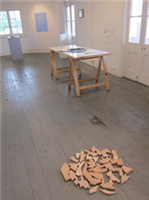
The exhibition, 'In the Artists’ Absence', currently on at The Collective in Durban (13 Feb – 03 March), sees Van Jaarsveldt play a series of roles, and as such, he is very much present. The seed for what the exhibition has become germinated through a series of discussions with artist friends/colleagues in Belgium. Perhaps in their physical absence and through a potential yearning for their presence in some form, Van Jaarsveldt has orchestrated a conceptual possibility for this to happen.
In brief, the exhibition has been put together from a series of instructions given to Van Jaarsveldt by the participating artists who are not, and will never be, actually present. Based on these instructions he has made, has commissioned and has installed the various works according to what he was instructed to do. Snippets of information and images of the space were all the artists had with which to conceptualize the works.
In some cases, the instructions were very direct and simple, and relied on execution through a series of step-by-step commands. In other instances the process required interpretation; basic, drawn elements that would then have to be interpreted into physical objects.
In one specific instance, a particular work is literally conspicuous in its absence. The mailed instruction of the work is yet to arrive – perhaps is slowed up in the mail and will still do so, or may in fact be lost forever. Nonetheless, this work sits in limbo; waiting in suspended absence.
13 February 2012 - 03 March 2012
Grand Opening
Various Participants at The CollectiveThis last week Durban saw the launch of a new gallery space, The Collective. An offshoot from the Durban staple artSPACE, The Collective has a batch of freshly-baked (and much-needed) ideas with which to broaden Durban’s generally insular art scene. Chatting to the three young women behind the new space, my first thought was: 'Thank goodness there is something new happening in Durban!'
The Durban gallery culture is an odd one. It seems to (deliberately?) remove itself from any contact with Johannesburg- or Cape Town-based galleries and artists. Occasionally something exciting pops up – like the recent MTN New Contemporaries at the KZNSA, but largely, it’s the same stable of painters, painting the same portraits (with the occasional landscape thrown into the mix). With the closure of Bank gallery, the Durban Art Gallery focusing largely on ‘Durban’ art (I refer to my interview with new curator Mdu Xakaza published on ArtThrob recently), the KZNSA apparently giving space to whoever can afford to exhibit, and artSPACE seemingly rehashing the same art under a different title monthly, a breath of fresh air into the Durban art scene is much needed. Despite producing incredible young talents such as Michael McGarry, Vaughn Sadie and Dineo Seshee Bopape, artists seem to run screaming for the highveld at the first opportunity, in search of a more appreciative, and possibly less conservative, art market.
The curatorial and gallery focus in Durban is based very much on saleable and decorative art – where guest speakers at openings generally encourage the audience to 'get those wallets out and buy!' Whether Durbanites just have less money to spend on art than their Jo’burg peers, or whether it’s the gallery system perpetuating such a ‘painting on the lake’ atmosphere, the Durban art scene is very much the literal and metaphorical ‘poor cousin’ of its larger relatives.
Now before I have a slew of hate mail, let me remind you of my initial point: thank goodness something new is happening in Durban. It is well overdue, and the public responded. The opening was packed, and there was a genuine buzz of excitement at the possibilities of the new space.
16 May 2011 - 16 June 2011
A Change of Heart
Various Participants at Victoria and Albert Museum (V&A)'Artist-slash-photographer' was a contentious double act which slid in and out of focus at the highly-charged ‘Ethics and Poetics of Photographic Depictions of People’ conference at the Victoria and Albert Museum in June. A discursive ancillary to Tamar Garb’s ‘Figures and Fictions: Contemporary South African Photography’ exhibition housed down the vaulted passageway, the conference aimed to dispense with default positions in ways of framing South African photography: getting it, in a sense, to sit still long enough for us to observe its contemporary manifestations in sharper detail. One of the exhibition’s main trajectories was to trace the simultaneity of South Africa’s re-emergence into international cultural economies and photography’s entry into the global circuits of contemporary art as a recognised, and indeed valorised medium which was doing something more than ‘just document’. It seems, however, that the shutter speed has been somewhat slow on a localised level, resulting in a blurry conception of how to approach a context-heavy historical archive of documented social realities and the affective, highly-saturated sophistication of itinerant contemporary art-photography.
24 June 2011 - 25 June 2011
Listings(s)
Pre-Post-Per-Form - Colloquium on Interdisciplinary and Performance Art
Various Participants at The University of Cape Town’s Gordon Institute for Performing and Creative Arts (GIPCA)Pre-Post-Per-Form, hosted by UCT’s Gordon Institute for Performing and Creative Arts (GIPCA), is a colloquium convened by GIPCA’s Creative Arts Awardee Jay Pather to explore interdisciplinary and performance art and will bring together leading artists, academics, festival directors and curators, journalists and writers. Panels, lectures, discussions, viewings, exhibition walkabouts and performances are scheduled throughout the three days.
Participants include iconic Mexican-American performance artist Guillermo Gómez-Peña; Trevor Davies, director of the Metropolis Biennale; writer and artist Sue Williamson; curator Melissa Mboweni; award-winning architect/visual artist Doung-Anwar Jahangeer; renowned scholar and writer Sarah Nuttal; veteran journalist Adrienne Sichel and performer Mwenya Kabwe.
Performances include GIPCA Fellow Robert Jeffery’s Songs in Dead Languages, Athi-Patra Ruga’s work and 'Ingcwaba lendoda lise cankwe ndlela', a physical theatre piece directed by GIPCA awardee Mandla Mbothwe, as well as exhibitions by Svea Josephy (Third Worlds: Model Cities); Fritha Langerman (Subtle Thresholds); Jonah Sack (A proposal for a new city, the same as the old) and Roger van Wyk (Dada South).
The registration is R500 for the three day colloquium (including tickets for all performances), or R200 for students. Bookings through Computicket www.computicket.co.za.
For more information contact Niek de Greef at GIPCA on (021) 480 7156 or email niek.degreef@uct.ac.za.
20 February 2010 - 22 February 2010
Dada South? Exploring Dada legacies in South African art 1960 to the present: Closing Event
Various Participants at Iziko South African National GalleryDada South closes on Sunday with a series of talks and performances featuring John Nankin (artist, set designer and central figure in Cape Town’s history of experimental and avant-garde theatre), Adrian Notz (co-director of Cabaret Voltaire in Zurich), Lia Perjovschi (who has been co-ordinating a complex personal archive for over twenty years in Romania) and Shelley Sacks (who trained and under Joseph Beuys, and based in the UK since 1990 has developed various art projects with a focus on social sculpture).
Sunday February 28, 2010
11h00 – 16h00
28 February 2010 - 28 February 2010
Public Discussion on 'reGeneration2 – Tomorrow’s Photographers Today'
Various Participants at Michaelis GalleryUCT’s Gordon Institute for Performing and Creative Arts (GIPCA) will host a panel discussion entitled 'Present and Future Photography – Capturing the Present, Curating the Future', looking at the 'reGeneration2 – Tomorrow’s Photographers Today' exhibition. The discussion is an opportunity to learn more about the exhibition from co-curator William Ewing who will explore how it illuminates current and future trends in photography. Ewing is a globally-respected curator, author and editor whose exhibitions have been shown at the Museum of Modern Art, New York and the Centre Pompidou, Paris, amongst others.
The panel will include critic, writer and editor Alexandra Dodd and Dr Litheko Modisane, Postdoctoral Research Fellow at UCT’s Social Anthropology Department, and will be chaired by Professor Pippa Skotnes, Director of UCT’s Centre for Curating the Archive.
The discussion takes place on Thursday 29 July, 17h30 for 18h00
Commerce Lecture Theatre, Commerce Building,
UCT Hiddingh Campus, Orange Street, Cape Town.
All are welcome to attend and entrance is free.
29 July 2010 - 29 July 2010
Dinosaurs or Dynamos: Is There a Future for Museums in South Africa?
Various Participants at Iziko South African National GalleryJoin Pippa Skotness in conversation with Dr. Steven Dubin, Sue Williamson, Riason Naidoo (Director of ISANG) and Andrew Lamprecht as they discuss South African Museums: Challenges and Opportunities.
The discussion is a Jacana Media, Book Lounge, Cape Times and Equal Education initiative. Members of public are asked to please bring high quality children's and young adults' books in good condition, to donate to Equal Educations book drive for school libraries.
Starts at 14hoo for 14h30
RSVP: strictlytickets.com
01 August 2010 - 01 August 2010
Beyond The Racial Lens - Bonani Africa 2010
Various Participants at Assorted venues in and around Cape Town'Beyond the Racial Lens - The Politics of South African Documentary Photography, Past and Present': The Bonani Africa 2010 Festival of Photography exhibition and conference.
If South Africa’s tradition of social documentary photography remains among its best known and most celebrated cultural achievements, it has also been at the centre of the often tumultuous debates regarding art, historical memory, and political engagement post democracy. During apartheid photographers sought to challenge the prevailing visual regime at a number of different levels: recording and exposing the system’s brutalities, celebrating myriad forms of survival and resistance and producing alternative narratives.
A younger generation of photographers has increasingly turned toward experimentation with both aesthetics and the medium itself to forefront questions of identity, sexuality, subjectivity, and persona. Yet the afterlife of apartheid’s social divisions and the persistence of a highly divided society continue to pose the question of photographic representation with intensified force. Who controls the creation and distribution of images, who represents whom and for what audiences, and how can people come to see differently?
Featuring the work of 56 photographers and more than 60 photographic essays, the exhibition covers an array of subjects, from the effects of breast cancer to the display of opulence that is a hallmark of success amongst the country's new elite.
The conference programme runs from 19-21 August 2010 and brings together 'a diverse group of photographers, curators, art critics, and historians to discuss and debate this multi-faceted theme over a four day period,' says Omar Badsha, CEO of South African History Online.
It includes a series of discussions, lectures and seminars held at the TH Barry Lecture Theatre of the South African Museum in Cape Town. A highlight of the conference is a conversation between Omar Badsha and David Goldblatt in 'Photography beyond the Racial Lens,' on Thursday 19 August.
Exhibition opens: Wednesday 18 August, 18h00 for 18h30, Castle of Good Hope.
For a detailed programme, please visit the SA History Online website at http://www.sahistory.org.za/pages/saho%20stuff/saho-exhibitions/bonani/program.htm
18 August 2010 - 18 September 2010
'Sketch Assembly'
Andrew Putter and Various Participants at The University of Cape Town’s Gordon Institute for Performing and Creative Arts (GIPCA)'Sketch Assembly' is a new educational project designed by Andrew Putter which focuses on what artists rarely exhibit: the tests, versions and sketches made on the way towards producing finished products. In this new project in the 'Hottentots Holland' cycle, Putter and a group of 30 young artists and designers – called the 'Sketch Assembly' - spent four months playfully re-imagining early contacts between ‘Hottentot’ and Dutch youth at the Cape in the 1600s. No final products were made: only increasingly ambitious sketches, often in the form of elaborately staged photographs. The 'Sketch Assembly’s' work is carefully based on Dutch merry company prints and paintings from the 1600s, and on the few, rare drawings of the Cape Khoikhoin (‘Hottentots’) that still exist today. The exhibition shows the many sketches and exploratory processes made by the group, including photographs, drawings, diagrams, costumes, and props.
Artists and designers included: Paul Ward, Swain Hoogervorst, Penny Youngleson, Angela Nemov, Katryn Beaurain, Jen Bam, Leigh Bishop, Anine Kirsten, Jeanne Fourie, Claudio Massenz, Christiaan Conradie, Warren Papier, Karin Williams, Noël Platts, Claire Watling, Pieter Janse van Rensburg, Alessandro Betti, Morne Visagie, Mbongeni Dlamini, Andrew McNally, Leah Hawker, Inge Jansen, Jody Paulsen, Mikkie-dene Le Roux, Melissa Haiden, Joshua McLean, Dylanne Powell, Chad Petersen, and Seemaa Allie.
Open only Wednesday 20 and Thursday 21 October at the Michaelis Gallery
20 October 2010 - 21 October 2010
Emerging Modernities: colloquium / exhibitions / panels / performances / installations
Various Participants at The University of Cape Town’s Gordon Institute for Performing and Creative Arts (GIPCA)The Gordon Institute for Performing and Creative Arts (GIPCA) at UCT is hosting the ground-breaking Emerging Modernities event from 18 - 20 February.
"Emerging Modernities is a creative platform where academia and the arts meet in an interactive way to explore current conceptual issues surrounding the notions of redefining contemporary identities and art," says GIPCA Director Jay Pather.
"The event is structured in a unique way, in that it combines performances, installations and exhibitions with panel discussions. We want to give attendees an opportunity to observe some of South Africa's cutting edge artists in action, and then also reflect critically on the experience, with its conceptual implications, with a panel of experts," said Pather.
The weekend long Emerging Modernities opens with an address by the highly respected Simon Njami, art critic, novelist, essayist and curator, of Cameroonian decent and currently residing in France. Mwenya Kabwe, Peter van Heerden, Andrew Putter, Nandipha Mntambo, Magnet Theatre and Sello Pesa are some of the contributors who will be showcasing their work, combined with panel discussions facilitated around issues relating to performing and creative arts disciplines, as well panels that deal with language, the city, and notions of tradition and curriculum design.
Panelists include academics and cultural theorists Crain Soudien (Deputy Vice Chancellor, UCT), Neo Lekgotla laga Ramoupi (Africa Institute of South Africa, Pretoria, Deborah Posel (Director: Institute for Humanities in Africa), Neo Muyanga and Ntone Edjabe (Pan African Space Station), Bettina Malcomess, Rael Salley, Gabi Ngcobo, Gavin Younge, Mark Fleishman and composer Bongani Ndodana-Breen.
The topics addressed during the panel sessions will include "Emerging modernities and the contested curriculum in the post colony", "Re-presenting the other, artistic collaboration and identity construction as process in the visual arts", "Intercultural composition and Pan African re-emerging and merging in music", and "Performance and the African city: multiple tongues; hybrid formations and translocations".
In addition to the sessions that critically reflect on existing bodies of work, the event will also host the première of a work composed by Wits University's Jeanne Zaidel-Rudolph and UCT's Anri Herbst as part of a research project on indigenous knowledge systems, focussing on the preservation of Xhosa overtone singing. A concert will be held on Saturday evening featuring the Ngqoko Women's Ensemble, showcasing their unique music style.
The second half will comprise the Women's ensemble with 13 instrumentalists, conducted by Alexander Fokkens, performing originally composed music by Zaidel-Rudolph, Christo Jankowitz and Kerryn Tracey. ??The conference also hosts the première of Peter van Heerden and Anne Historical's installation work Monument, which will take place at the Castle of Good Hope. Another site specific performance will be In House by Ntsoana Contemporary Dance, featuring Sello Pesa and other performers.
Die Vreemdeling by Magnet Theatre, directed by Mark Fleishman, is also on the programme. The event includes an exhibition walkabout of In Context at the South African National Gallery, led by curator Liza Essers, director of the Goodman Gallery.
Registration for Emerging Modernities is open to members of the public, and the fee for attending all the sessions and performances, is R350. This includes all lunches and teas, the opening cocktail function and transport to the various installation performances throughout the city. A subsidised student registration is available at R70.
The event opens on Friday evening 18 February, and ends on Sunday 20 February. ??The full Emerging Modernities conference programme will be available online (www.gipca.uct.ac.za) by the end of January.
Early registration for the conference is now open, and can be done by contacting Adrienne van Eeden-Wharton on 021 480 7156, or by e-mailing fin-gipca@uct.ac.za.
18 February 2011 - 20 February 2011
'Infecting the City'
Various Participants at Various venues around Cape TownThe Africa Centre presents 'Infecting The City' for the fourth year in a row, a public performance festival in which Cape Town’s plazas and squares become theatres, the pavements turn into art galleries, and, this time, even a rubbish truck will be used as a stage.
This year’s 'Infecting The City' theme, ‘Treasure’, is about making art something to which everyone can relate. You’ll find sufi rituals, b-boy duels, sari wrapping, stick fighting, and even drummies in the mix with opera, sculpture and other performance art. he big new square in front of the Cape Town Station – the ‘Station Forecourt’ – will serve as the Festival Hub, where much of the action is taking place. If you catch a train into the City you’ll find various bands playing there first thing in the morning, again at lunch and in the late afternoon. There are also visual and performance artists working there throughout the day. Although the Station is the Festival Hub, the entire Central Business District will be full of 'Infecting The City' events throughout the Festival week.
Visit www.infectingthecity.com to get more detail on the programme and the map, which locates all the Festival’s activities.
21 February 2011 - 26 February 2011
Toffie Pop Culture Festival
Various Participants at Cape Town City HallToffie Pop Culture Festival is three day event that includes exhibitions, workshops, presentations and partying. Curated by Peet Pienaar’s design agency The President and hosted in both Cape Town and Buenos Aires, this annual event returns with talks and presentations by twenty four talented South African creatives including Andrew Putter, Brandt Botes, Frauke Stegmann, Francois Burger, Tumi Molekane and more, as well as a selection of international guests such as Argentinean filmmaker Javier Lourenco and designer Michael Spahr, an artist, filmmaker and storyteller from Switzerland.
The festival will also include daily boxing matches and “inspiration tables” by Kobus van der Merwe, Dokter & Misses, David West, Barend de Wet, Sangoma & Photon Foundation, Iziko Museums and more. A Word Of Art features “Adidas Originals Exhibition” with live painting by Boamistura. Food, beer and music also feature in a comprehensive line up. Programme available at:
http://toffiepop.blogspot.com/
24 March 2011 - 26 March 2011
'Geography of Somewhere'
Various Participants at STEVENSON in JohannesburgBrodie/Stevenson presents a curated group show under the title 'Geography of Somewhere' during April and May.
As the gallery states, 'At the heart of this exhibition is a paradox: the work it brings together may be understood as coming from the city, but it is not of the city. The artists' practices draw aspects of their vocabularies from conditions of the urban, yet their works are not simply descriptive of the "city".' Work by artists such as Odili Donald Odita, Zander Blom and Dineo Seshee Bopape is included.
14 April 2011 - 13 May 2011
Figures & Fictions Conference: 'The Ethics and Poetics of Photographic Depictions of People;
Various Participants at Victoria and Albert Museum (V&A)The exhibition 'Figures & Fictions' focuses on the representation of people. This conference - 'The Ethics and Poetics of Photographic Depictions of People' - will address the way contemporary and recent South African photography stages, complicates and contests identity in a huge variety of practices. Papers will examine the ethnographic past as well as historic documentary practices and portraiture, to explore the various ways in which humans have been depicted in this region. Contemporary photographers will discuss their work in relation to this photographic past. Critics, artists and historians will engage in debate about the politics, ethics and artistic strategies of picturing people in South Africa.
24 June 2011 - 25 June 2011
Spring Queen
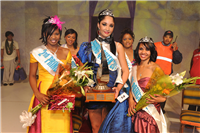
Various Participants at Michaelis GalleriesThe Spring Queen pageant is one of the largest and longest running fashion pageants in history. It is a unique event in which women factory workers from the textile and clothing industry in the Western Cape take to the ramp and model to showcase not only beauty, but also personality and style. The pageant began in the late 70s and shows no signs of cessation. It remains a highlight on the Cape Town social calendar with up to 10 000 excited and jubilant supporters attending the final event hosted by the Southern African Clothing and Textile Worker's Union (SACTWU) at the Good Hope Centre in Cape Town. Thousands of women participate in in-house factory beauty pageants. A factory Queen is then chosen and these Queens, anything between 40 - 60 women, then represent their factories and go on to compete in the SACTWU Spring Queen competition. The coveted title of the SACTWU Spring Queen, the Queen of Queens, is then awarded along with 1st and 2nd Princesses, as well as a Miss Personality and a Miss Best Dressed.
In recent years, with the closure of many textile and garment companies and with job layoffs as a harsh reality, this is truly beauty with a purpose, the crowning of the Proletariat Queen. This exhibition has engaged with the various collections of the Spring Queen pageant from the private to the public and aims to imagine a possible future archive. This will be a space for connectivity, creativity, storytelling and the re-imaging of history.
Curated by Dale Washkansky
13 July 2012 - 24 August 2012
Maboneng Gugulethu Arts Experience
Various Participants at Various venues around Cape Town The Maboneng Township Arts Experience strongly resonates with a movement quickly growing in South Africa. It speaks of public spaces, social integration and freedom of movement. It enables citizens to equally share public space and build healthier, sustainable and integrated communities. Following the success of the Maboneng Township Arts Experience at eMadedeni in KZN and Alexandra Township, Johannesburg. The lights will now shine brightly on the infamous township of Gugulethu the pride of the Western Cape, the province where tourists are always drawn to like a moth to a flame! The most colorful and enchanting of all townships, Gugulethu is known for its spirit of ubuntu, its residents are a formidable team that has worked closely together from the get-go. This is what drew the Maboneng team to Gugulethu, staying true to our legacy of linking like-minded townships and cities as an integral part of cultural transformation. We intend to add to Cape Town’s hub of cultural activity, leaving our mark on the street of NY 147 and NY 144, a short distance from the popular Mzoli’s. The countdown to the highly anticipated Maboneng Gugulethu Arts Experience is upon us. We are extremely excited to bring you a memorable weekend in the beautiful township of Gugulethu. The festival will take place from the 24th to the 25th of November and both days will be abundant with entertainment and activities. The festival will kick off with an exhilarating bike and skate ride from the City of Cape Town to Gugulethu courtesy of @Openstreets, @cyclelinks and @Sk8collective – The National Skate Collective. There will also be a wide range of delicious township cuisine on sale for breakfast and lunch such as the classic bunnychow, fatcakes as well as vegetarian meals. Taking centre stage at the exhibition will be the ALL NY’s Parkjam feauturing highly gifted artists such as Crosby, Khanyi & Coriander, not forgetting the captivating dance pieces which will be curated by the reputable Ikapa Dance theatre and Jazz Art. Iliso Labantu, A non-profit organisation that provides photography training and opportunities for individuals in townships around Cape Town will be exhibiting some amazing photo’s. Also not to be missed is some ingenious inventions by Boundless Heart Foundation geared towards youth development and upliftment, and what would a Maboneng Arts experience be without awe-inspiring graffiti art by some of the Cape’s finest graffiti artists such as the likes of Fuzzy Chap, Faith 47, Ricky Lee and Atang Tshikareas. Not only will this be one of the most memorable events to take place in Gugulethu but it will also coincide with the eventful Cape Town Art Week where galleries in the city have synergised openings, a definite must see by Contemporary Art Development Trust. Please come join us for our opening at the park of NY 144, next door to Bonga Primary School on the 24th of November 2012 at 12pm. With all that said the Maboneng Gugulethu Arts Experience is guaranteed to be a wondrous treat. The community of Gugulethu anxiously awaits your arrival and promises to welcome you with open arms into the homes they’ve so kindly braced for this event. You too can do your bit and add to the greatness of the experience by supporting in any way, please use the Contacts tab on our website to get involved if you would like to. We look forward to bringing and celebrating the lights of our lovely township of Gugulethu with you! We leave you with the magical time we experienced at the 2012 Maboneng Madadeni Arts Experience. Enjoy!24 November 2012 - 25 November 2012
'My Body My Choice'
Various Participants at Cape Town City HallThe City of Cape Town’s Arts and Culture Department, in collaboration with Rhodes University will host a series of female empowerment exhibitions and workshops which coincide with the 16 Days of Activism for No Violence against Women and Children. The programmes will run from 4 to 6 December 2012 at the City Hall, Darling Street Cape Town.
The 'My Body, My Choice', is an exhibition highlighting a women’s autonomy and their right to choose. The exhibition creates a space where women can respond to the victim-blaming, secondary victimisation and social stigma they face when they speak out about the violence they have experienced.
The message of 'My Body, My Choice' is that women are more than just the sum of their parts and their autonomy and choice is not diminished by what they wear, or do not wear. Nobody has control over your body except for you. Your body, your choice.
Exhibition Opens: 6.30
To book for seminars/workshops, please RSVP to Nikita Campbell: Nikita.Campbell@capetown.gov.za
04 December 2012 - 06 December 2012
First Thursdays Cape Town: December
Various Participants at Various venues around Cape TownOn the first Thursday of every month, the city becomes a museum like no other. Walk from gallery to gallery until 9pm, and explore the shops, restaurants and bars along the way.
For the second First Thursdays Cape Town, art galleries and shops between Wale Street and Hout Street will stay open late, bringing The Loop to life at night. An idea borrowed from London and now many other cities around the world, First Thursdays happens every month. Start at any of the participating galleries and work your way a
round.
Date: 6 December 2012
Time: 5 - 9pm
Galleries:
- Cape Town School of Photography Student Exhibition
- AVA
- Brundyn + Gonsalves
- EBONY
- Erdmann Contemporary / ThePhotographersGalleryZA
- KND Nautical Gallery
- G2 Art
- Youngblood
- New Heritage Gallery
- The d'VINE art ROOM by Shay Davis
Shops:
- Olive Green Cat
- MeMeMe
- Imagenius
- Sitting Pretty
- Mungo & Jemima
- Babette Clothing
Food & Drink:
- Dear Me (Reservations: 0214224920)
- Clarke's Bar & Dining Room
- Little Ethiopia (Reservations: 0214248254)
- Tjing Tjing Rooftop Bar
Map: http://goo.gl/maps/Rvu0j
Website: first-thursdays.co.za
Tweet: #firstthursdays #capetown
Contact: goodevening@first-thursdays.co.za
06 December 2012 - 06 December 2012
'The Art of Life and Death (and everything in between)'
Various Participants at Wits Art MuseumThis rich exhibition, drawn from WAM's permanent collection, explores the theme of cycles of life in African art.
Ancestry, birth, childhood, initiation into adulthood, childbearing, senior status and death are all sites of significant art-making. Fascinating historical and contemporary objects offer reflections on the kinds of aesthetic expressions that mark or differentiate parts of the endlessly cyclical journey of life.
01 November 2012 - 28 February 2013
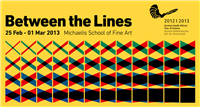
'Between the Lines'
Various Participants at Michaelis Galleries'Between the Lines' is a forum for artistic and academic dialogue that will invite ten artists and thirty art students from Germany and South Africa into intensive exchange via two symposia and an exhibition.
'Between the Lines' aims to reflect on and facilitate innovative artistic research that engages specifically with questions of translation and mediation across social and cultural difference.
The invited artists are Ulf Aminde (DE), Yael Bartana (IL/DE), Candice Breitz (ZA/DE), Gabrielle Goliath (ZA), Asta Gröting (DE), Nandipha Mntambo (ZA), Athi-Patra Ruga (ZA), Penny Siopis (ZA), James Webb (ZA) and Ming Wong (SG/DE) with keynote addresses in Cape Town by Achille Mbembe (CM/ZA) and Gavin Younge (ZA).
'Between the Lines' is funded by Germany's Federal Ministry of Education and Research in the context of The German-South African Year of Science 2012/2013, a year of exchange between South Africa and Germany that aims to strengthen cooperation and create new networks between the two countries.
All events are open to the public and free of charge.
For a detailed schedule of events and more information please visit:
25 February 2013 - 01 March 2013
'Infecting the City 2013'
Various Participants at Assorted venues in and around Cape TownThe Gordon Institute of Performing and Creative Arts (GIPCA) partners with the Africa Centre in Infecting the (Mother) City with installations, performances, readings, film screenings and discussion sessions, from 11 – 16 March 2013.
In collaboration with several national and international partners, the Gordon Institute presents a diverse range of works that embrace interdisciplinarity whilst engaging with public spaces in compelling ways. These emerge from the University of Cape Town’s Creative and Performing Arts departments, the culminating presentations of 2012-2013 Donald Gordon Creative Arts Fellows and Award Winners, as well as workshops and commissioned international pieces. GIPCA also partners with the Public Culture CityLab (African Centre for Cities, UCT) on Thinking the City, a series of talks and discussions seeking to strengthen thinking and practice at the intersection of culture and public space.
‘This year’s marvellous crop of works for Infecting the City from the Dance, Music, Drama and Creative Writing departments as well as through UCT’s African Centre for Cities and international partnerships, reflects a wonderful surge of interest in and engagement with interdisciplinarity and public art’ commented Jay Pather, GIPCA director.
Having recently returned from sold-out performances at the Ovalhouse in London, highly acclaimed choreographer and Donald Gordon Creative Arts Fellow, Mamela Nyamza, presents a startling dance performance 'Okuya Phantsi Kwempumlo' (The Meal), for which she received a Standard Bank Ovation Award at the National Arts Festival 2012. Also featuring Dinah Eppel and Kirsty Ndawo, the work celebrates the creative capacity of young South Africans to subvert and transform instruments of oppression and denigration into expressions of ecstasy and beauty; and reflects on the relationship between women from different generations and races.
Awarded the main Puma Creative Prize and the first prize in the Group Pieces category at danse l’Afrique danse in Bamako, 2010, 'Orobroy, Stop!' was conceptualised under the creative direction of esteemed Mozambican choreographer, Horácio Macuácua. In an inventive intercultural reconstruction of Flamenco, deep emotions, notions of identity, gender and conflicting experiences are explored in a visceral manner in this provocative work. The work is presented with support from the Swiss Agency for Development and Cooperation (SDC).
The initiators of 'Trespassing Permitted', Donald Gordon Creative Arts Award Winner Mike Rossi and composer Ulrich Suesse, have created a crossover performance that leaves behind musical conventions. Featuring Feya Faku, choreography by Nicola Elliot and dancers from the UCT School of Dance, the works ‘trespass’ or overstep various boundaries; improvisation encroaches on composition, jazz invades western classical, African and European sound spectra are interpolated, and dancers meddle in the creation of sound.
In 'Shades of Grey', the Cape Consort presents a fractured audioscape of late medieval European and 19th-century colonial culture in historically informed interpretation, based on research by musicologist Rebekka Sandmeier, also a 2012 Donald Creative Arts Award Winner.
Donald Gordon Creative Arts Fellow, Michael MacGarry’s short film 'As Above, So Below', concerns a philosophical re-imaging of naturalist Charles Darwin’s brief visit to the Cape of Good Hope in 1836. A black and white period film, it focuses on issues of industrial progress, the absurd, colonial taxonomy and The Uncanny, all within the mode of narrative cinema.
Award-winning fiction writer, Henrietta Rose-Innes, shares excerpts from, and insight into, her novel, 'Green Lion', developed during her Donald Gordon Creative Arts Fellowship. Through the interaction between a human protagonist and a rare lion, this novel explores species loss and animal / human encounters.
Known in the UK for their innovative approaches to theatre and community engagement, Arcola Theatre and Punchdrunk’s 'The Uncommercial Traveller' project involves a series of workshops with post-graduate students and theatre practitioners to devise and write reflective audio tours in locations in Cape Town by using Charles Dickens’s approach of seeking out forgotten places and uncovering hidden stories. Collaborating with internationally recognised local artist, James Webb, on the sound design, these engaging audio tours will be made available to Festival audiences. 'The Uncommercial Traveller' is supported by the British Council and to date has travelled to Karachi, Melbourne, Penang, Singapore and Portsmouth.
Curated by Nadja Daehnke around the themes of movement and transit, the 'Platform_18_28' exhibition at the Cape Town station includes paintings, sculptures and photographs produced by students from the Michaelis School of Fine Art; while the collaborative building project between Tokyo-based artist Aeneas Wilder, curator Winnie Sze and the UCT School of Architecture, 'Under Construction', seeks to ask poignant questions around what it means to be a resident in the City. Installed in the District 6 Museum, Wilder’s fragile work which involves meticulous construction and then a spectacular public destruction will have particular resonance within the space that it is installed..
Presented in collaboration with the Public Culture CityLab, the four 'Thinking the City' discussion sessions will contribute to the Infecting the City programme by unpacking a series of examples and contested territories related to cultural practice in the city. Themes will include: Public space, festivalisation and contested cultural expression; Design and the creative city: the creative city for whom?; Managing access: city bylaws and the regulation of culture; and What makes art ‘public’?: reflections on participation and practice in contemporary public culture in South Africa.
These installations, performances, readings, film screenings and discussion sessions will take place at various Cape Town venues, and are presented by The Gordon Institute for Performing and Creative Arts, as part of the 2013 programme for the Infecting the City Public Arts Festival. For more information on the Festival, please visit www.infectingthecity.com and www.gipca.uct.ac.za
11 March 2013 - 16 March 2013
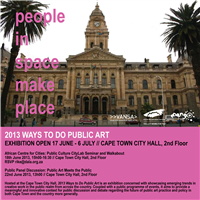
'2013 Ways to do Public Art'
Various Participants at Cape Town City HallWhat are the different forms of public art and what does it mean to bring these into being? These are some of the questions the 2013 Ways To Do Public Art exhibition hosted by the City of Cape Town in partnership with the Visual Arts Network of South Africa at the Cape Town City Hall hopes to answer.
The exhibition runs from 17 June to 6 July, 10h00 – 17h00 daily (except Sundays) and showcases emerging trends in creative work in the public realm from across the country. The exhibition, coupled with a public programme of events, aims to provide a meaningful and innovative context for public discussion and debate regarding the future of public art practice and policy in both Cape Town and the country more generally. The event opens on 15 June at 18h00.
The Mayco Member for the Directorate of Tourism Events and Marketing, Grant Pascoe says: “The City of Cape Town is proud to host this important exhibition and dialogue forum. We are committed to public art and creative expression in the city. World Design Capital 2014 will, in addition, bring many opportunities for beautifying our city. For this reason, the City is embarking on the development of a Public Art Regulatory Framework (PARF) which will create an enabling environment for public art promotion.”
While the project will feature work developed through VANSA’s Two Thousand and Ten Reasons To Live in a Small Town project, this exhibition also includes parallel work being done by other individuals and organisations that seek to extend the parameters for public arts; experimenting with new forms of process and outcomes that can change the way people think about the role of art in public life. The public programme of workshops and discussions running alongside the exhibition will bring together citizens, artists, curators, urban planners, architects, development practitioners and public officials. In addition public art professionals from around the country will share experience and lessons learnt in engaging with policies and practice around the commissioning of public art through local government. This dialogue will be fed into discussions on the development of the Public Art Regulatory Framework being developed by the City of Cape Town.
The project has been commissioned by the City of Cape Town from the Visual Arts Network of South Africa, working in collaboration with the Durban-based creative collective dala, the African Centre for Cities (University of Cape Town), the Contemporary Art Development Trust (Cape Town).
The Public Programme:
Exhibition Open
17 June - 6 July 2013, 6pm, Cape Town City Hall, 2nd Floor.
Details: Go here.
Africa Centre for Cities Walkabout and Seminar on Public Culture/Practice
18th of June 2013, 15h00 – 16h30
Details: Go here.
Public Panel Discussion: Public Art meet the Public
22nd June 2013, 13h00 Cape Town City Hall, 2nd Floor
Details: Go here.
17 June 2013 - 02 July 2013
'The Life of Forms'
Various Participants at Goethe InstitutThe GoetheonMain project space becomes a satellite venue for hosting exhibitions, stagings and interventions related to JWTC, conceptualised by Zen Marie. Participants of the workshop are invited to extend their theoretical work space, through visual, audial, performed and spatial dimensions.
The JWTC Project Space at Goethe on Main, will be an experimental contemporary art space, a vehicle for curating theory. Somewhere between exhibition and symposium, the project space at the 2013 JWTC aims to explore the correspondence and discontinuities between theory and practice, in ways that interrogate the categories of form and content.
'The Life of Forms', the theme of the 2013 JWTC will mobilize a framework: The space will be modular and multifunctional, operating simultaneously as work space, discussion/presentation environment, while at the same time restituting ideas generated from JWTC workshops, past and present.
As a result, some of the interventions and collaborations in the space will be developed in a real-time relationship to the workshops in 2013 JWTC, while others will take a retroactive view of how theory manifests in art documentation by working through archival material from past JWTC’s.
While participants and speakers at 2013 JWTC will be invited to collaborate with this project, there are artists who are conceptualizing a range of interventions and perspectives in advance. These include:
Talya Lubinsky
Raimi Gbadamosi
Frances Burger
Naadira Patel
Michelle Monareng
Georgia Munnik
Lungelo Pule
Tolo Pule
Zak Blas
Marie Ange Bordas
Karin Tan
Antonia Brown
Georges Pfruender
Mwenya Kabwe
Tshego Khutsoane
Kutjo Green
Cynthia Kros
Soundmind Lab
and others
The project space becomes a platform for theoretical/aesthetic model building, a laboratory for practice-based theory or a stage for concepts to be performed.
Source: facebook.com/events/133917943474811/
28 June 2013 - 18 July 2013
'The 48 Hour Film Project'
Various Participants at Various venues around JohannesburgGet your team ready, the 48 Hour Film Project is back in Johannesburg. Film makers will hit the streets of Johannesburg from 6-8th September 2013. The 48 Hour Film Project is the ultimate filmmaking challenge. This year, Johannesburg will be one of a record 125 cities worldwide – from Beijing to Lisbon -competing in the 48 Hour Film Project.
The Best Film from the city of Johannesburg will then be in the running for top honours at the Filmapalooza, U.S.A. The top 12 films from this world-wide event will screen at the prestigious Cannes Film Festival Short Film Corner.
To be part of the 48HFP Johannesburg, please consider that teams must register on or before 6 August to get the Early Bird rate. The Goethe-Institut will host Meet and Greet, Kick off and Drop Off for registered participants.
Johannesburg 48HFP Events
Kickoff
Date 6 September (Friday)
Time 18:00-19:00
Place Goethe-Institut Johannesburg, 119 Jan Smuts Avenue Off Newport Road Parkwood 2193
Notes This is the start of the actual 48 hours. Teams select the genre for their films and are assigned a character, prop and line of dialogue.
Dropoff
Date 8 September (Sunday)
Time 5pm-10pm (by 19:30 to be on time!)
Place Goethe-Institut Johannesburg, 119 Jan Smuts Avenue Off Newport Road Parkwood 2193
Notes Teams submit their completed film by 7:30 to be on time. Then hang out and trade war stories about the weekend.
Premiere Screenings
Date 23-29 September 2013
Time 6pm & 8pm
Place Ster Kinekor Cinema Nouveau Rosebank Mall, Oxford St Johannesburg 2196
06 September 2013 - 08 September 2013
'A MAZE Interact'
Various Participants at Various venues around JohannesburgAfter the successful kick-off of the 1st International Indie Games/Media Art Festival in Africa in 2013 in Johannesburg, A MAZE Interact is back. The festival aims to amaze the public, encouraging them to discover games beyond the mainstream, as well as encouraging creative people to deconstruct conventional computer games and go beyond established game concepts. Games, as the medium of the 21st century life, are the basis of all the events of the festival. At A MAZE, the combination of bold experiment with the joy of playing, pave the way for the convergence of computer games and art. A MAZE is more than just a festival – it’s an experience on different levels.
A MAZE invites the public to participate in the conferences, the workshops, the exhibition, the performances and the music events. A MAZE Interact is a public platform for sharing ideas, providing enduring knowledge, creating lasting relations and building a solid base for an extended cultural exchange.
Opening: 05.09.2013, 19H00, iLounge rooftop
afterwards party at Kitchener’s, Braamfontein
Live music by Moon Child, Dirty Paraffin (both South Africa), DJs Satori, Dubstep Soweto (both South Africa) T/ Racer and VJ SFA (both Germany).
Admission: R40
Programme highlights
Jam Africa: 24.08. – 01.09.2013
This Game Jam brings together game developers from across the continent and across the world, to start a creative conversation about games in Africa. In co-operation with Wits Digital Arts.
Exhibitions:
African and European Mobile Games, Computer Games, Local Multiplayer Games, Board Games, Street Games, Video screenings, Comics and Media Art Installations
Panel discussions:
'African Public Transport and its challenges in Games and Apps from Africa'. Speakers from Wits Digital Arts and others
'Socio-Political Commentry in Digital Art and Games in Africa'. Speakers from Wits Digital Arts and others
Workshops:
'Performing Video-games' pre festival workshop. Results will be presented at the festival.
Pecha Kucha Night and Closing Party:
Short format presentations at JoziHub, afterwards live music by BLKJKS Soundsystem
Admission: R40
05 September 2013 - 07 September 2013
FNB Joburg Art Fair 2013
Various Participants at Sandton Convention CentreThe 6th Joburg Art Fair opens at the Sandton Convention Centre this year with a line up of 35 participating local and international galleries and a range of special projects. Many of the same galleries from last year will be in the same places as last year, but for those attending the fair there will be the exciting prospect of spotting the booths of the various smaller galleries showing at the fair for the first time.
2013 sees Samsung partnering with Artlogic in a video art project using Samsung's new Ultra HD 85inch TV. Four of them in fact, showing work by Mohau Modisakeng. Artlogic's has focussed on photography for this year's fair and its special projects include:
'The Black Photo Album/Look at Me: 1890–1950' together with Maker Studio and photographer Santu Mofokeng.
'Phantasms of the Non-City', a selection from the 2013 edition of the LagosPhoto Festival in Lagos, Nigeria.
'African Emerging Photography', a survey of the new generation of African photographers curated by Michket Krifa and Laura Serani.
'The BRICS Project' presented by the Goethe-Institut and showing a selection of video works by artists from the BRICS countries.
A solo show by Roger Ballen at CIRCA on Jellicoe (for the lovers and the haters) featuring his collaboration with the always contentious, freshly accused rap/pop band, Die Antwoord.
'Heart Land' a not so much photographic exhibition by Dan Halter, in which Halter continues to address themes around identity and post-colonial politics in Zimbabwe expanding on a very personal and geographically specific experience to a more global and abstract engagement with ideas around migration and nationhood.
David Goldblatt as the featured artist. Enough said.
Nandipha Mntambo as the Pirelli Formulas 1 chosen artist, with the gloomily titled photographic series ' … everyone carries a shadow'. Riffing on Pirelli's campaign slogan “Let’s Dance” (based on the rhythmic unison between tyres and race cars) Mntambo's work is based on the Spanish Paso Doble.
Something called 'Bramble Fountain' - which artist Neil Le Toux described as 'a biological generative artwork made out of a collection of Ecological Conceptual Objects each comprising of at least 21 perennial plants and other important supporting components such as water, sand, rocks, wood, micro-organisms et al.'
A 'Spier Architectural Arts Project'. Spier will apparently be 'centre-stage at this year’s FNB Joburg Art Fair. As one of South Africa's most significant and representative corporate collections, the Spier Art Collection can be differentiated and defined as visionary due to its direct impact on the local visual arts industry.'
Last but not least, the FNB Art Prize for 2013; Nelisiwe Xaba & Mocke J van Veuren's 'Uncles & Angels', a collaborative dance and film project originally produced as a stage performance.
For more information on all of these check out the FNB Joburg Artfair website here, and keep an eye out for Artthrob's updates on all the hype (and maybe some scandal) on the website and of course, at the actual fair.
27 September 2013 - 29 September 2013
'Beautiful Things'
Various Participants at Nelson Mandela Metropolitan Museum
From exquisitely decorated Chinese garments to dazzling ceramics and colourful paintings and prints this exhibition promises to be a delight to your eyes.
06 September 2013 - 23 February 2014
The Cape Town Art Fair
Various Participants at The LookoutThe Cape Town Art Fair, South Africa’s newest contemporary art event, will debut in Cape Town from 25-27 October 2013. It is set to be the nation’s leading showcase for contemporary art with price points below R50,000.
The formula for the exhibition is simple: introduce a fresh, affable environment that is filled with contemporary art of exceptional quality. Each visitor to this lifestyle event will discover something of great value.
The Cape Town Art Fair will be hosted in the picturesque venue of The Lookout in Granger Bay, V&A Waterfront, Cape Town.
The Cape Town Art Fair is produced and managed by Fiera Milano Exhibitions Africa, the seasoned organisers of the Good Food & Wine Show, Africa’s premier food, beverage and lifestyle exhibition, held annually in Cape Town, Johannesburg and Durban. Fiera Milano Italy has also been conducting MiArt for the past 15 years in Milan. It is this expertise which will be accorded to exhibitors in the Cape Town Art Fair, ensuring the highest standards of service excellence, a first-class venue, outstanding visitor attendance levels, and unrivaled advertising, marketing, social media and PR campaigns.
On view will be an array of artworks made in traditional media: paintings, drawings and sculptures. Also available will be fresh artworks in photography, print and ceramics. The Cape Town Art Fair is an exhibition concept that proposes a lifestyle experience. In the Cape Town Art Fair's urbane environment, visitors will be able to snack, socialize, shop and listen to live music and while children enjoy fun activities just for them.
25 October 2013 - 27 October 2013
'The Nancy Holt Teleportation Device'
Various Participants at Goethe On MainRobyn Cook and Lauren von Gogh are the Sober & Lonely Institute for Contemporary Art, and have been loosely operating in Joburg, Durban, Los Angeles, Beetsterzwaag, Haukijärvi and the Internet for the past two and a half years.
In 2008, they started experimenting with telepathy, just before being separated by 13 468 km for two years. They had already been thinking each other’s thoughts for four years before that, and Lauren's grandfather was a magician that specialized in telepathic and hypnotic performances - so the practice of telepathy came naturally to them. Having thought transferal as a secondary means of communication for when they are separated by long distances has proved useful and comedic at the same time.
It would, however, be even more beneficial to be able to quickly, and cost effectively transport themselves from the bottom of Africa to wherever they need to be. They're working on figuring this out - connecting portals to portals - and making new connections in relevant places. In April 2012, they discovered what is thought to be one of the main portals. It is a Nancy Holt land art piece in the Finnish countryside, called Up & Under. At the end of August, Sober & Lonely invited the audience of the Transcontinental Express to build their own portals to connect with them in Johannesburg for their project at GoetheonMain.
This November, Sober & Lonely will build the Nancy Holt Teleportation Device at GoetheonMain, attempting to teleport objects, animals, and people to Up & Under, the Mojave Desert, and various other portals that may be open. Free tours will be available to teleport to Up and Under in the village of Pinsiö in the west of Finland, and to explore The Quietest Place on Earth, The Nancy Holt Teleportation Device Information Kiosk, The Twilight Room, The Kahvila Konditoria (with soapy cake), the Nancy Holt Teleportation Device Souvenir Shop, and the Centre of the World.
Opening Reception: 21 November from 18h30 at GoetheonMain, 245 Main Street, Johannesburg
The Nancy Holt Teleportation Device will be open from the 22nd of November to the 15th of December on Fridays, Saturdays and Sundays from 10am – 5pm.
22 November 2013 - 15 December 2013
'ART WEEK CAPE TOWN 2013'
Various Participants at Various venues around Cape Town'ART WEEK CAPE TOWN 2013' follows on from the inaugural 'Art Week Cape Town 2012'. An initiative of the Contemporary Art Development Trust (CADT), the event is aimed at increasing the visibility of, and strengthening, the visual art industry of Cape Town. For a period of time each year galleries, museums, arts organisations and artists will collaborate to create a strong public focus on the vibrant art scene of Cape Town.
Participating galleries, institutions and individuals are included in a coordinated programme of openings, events, and open studios throughout greater Cape Town. The programme is open to the public, with a view to providing a dedicated and accessible time and space for experiencing different manifestations of contemporary art in society.
'Art Week Cape Town' is envisaged as a means of reinforcing the existing strengths of the Cape Town art scene. It aims to create a more robust community of art producers, consumers and appreciators, by acting as a market platform, an information hub and a leisure attraction for locals and tourists. As Art Week Cape Town becomes established in the city, it will start to create greater general public awareness about art and the art market, and is therefore an initiative to build sustainability of the art market in South Africa.
'Art Week Cape Town' is made possible through the collaboration of galleries, institutions, independent collectives and individuals. Art Week Cape Town would like to thank its generous supporters and partner programmes:
Business Arts South Africa | The National Arts Council | Visual Arts Network of South Africa
For more information and the Art Week Cape Town 2013 schedule, please visit www.artweek.co.za
23 November 2013 - 07 December 2013
'Revolution Room'
Various Participants at MOAD Museum of African DesignVANSA is pleased to announce the first stage of the project, 'Revolution Room', undertaken in collaboration with the DRC-based collective, Picha, together with a wide network of local and international partners, and supported by Pro Helvetia, the Goethe-Institut and the Arts Collaboratory.
The 'Revolution Room' project seeks to explore new ways in which museums as public institutions can project themselves more forcefully into the public realm, through interventions in ‘common space’ developed out of complex collaborations between artists, citizens and museum professionals. The project will involve museum professionals working with artists and local partners/collaborators in developing projects in Cosmo City, a post-apartheid urban settlement in the north-west of Johannesburg.
The project will also seek to forge institutional linkages, collaborations, and a community of practice between South African, African and European institutions and organisations, borne out of the practical experience of developing a shared project.
The project builds on VANSA’s work in the area of public practice over the last few years through projects such as 'Two Thousand and Ten Reasons to Live in a Small Town', and our involvement and consultation with various public and private sector organisations. We anticipate a project that is both topical and responsive as well as a complex collaboration between the various publics, the creative community and public institutions through public interventions, education, experimentation and innovation. The project also links with a parallel project concerned with network development and collaboration on the continent, the Pan African Network for Independent Contemporaneity (PANIC'), which VANSA is developing together with Picha, an organisation based in the DRC which is responsible for the Lubumbashi Biennale.
VANSA will also be collaborating with Microsillons (Switzerland), The New Patrons Project (Germany) andKUNSTrePUBLIK / the Centre for Art and Urbanistics (Germany), together with museum educators from a number of heritage institutions based in Johannesburg and Gauteng, including the Johannesburg Art Gallery,Hector Peterson Museum, WITS Art Museum and Museum Africa.
The project launches with a workshop that will bring together our partners in sharing experiences, methods and context, while putting together a strategy and methodology for the future realisation of public projects within Cosmo City, and elsewhere. The workshop includes two open public colloquium sessions, to enable a wider audience of creative practitioners, students and interested parties to engage with and interrogate the logic of the project.
Revolution Room will also involve an intensive mapping of Cosmo City, working with young architecture and planning students and local youth. This mapping will also involve engagement with residents of Cosmo City in developing a conceptual and experiential map of the locality, and the identification of local networks, structures and individuals with which the project might engage in particular locations in Cosmo City.
For more information about the project, the workshop and colloquium, and collaborators and partners, go here.
We have also gone live with a new website for more information on the various partners, the project and a full programme of the colloquium. The website is designed to grow as a resource for the public and the creative industry as well as a project diary.
Please click here: www.revolutionroom.co.za
18 November 2013 - 24 November 2013
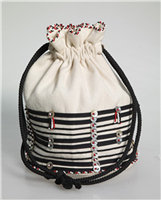
'Journeys in Beadwork: The Art of the Mfengu'
Various Participants at Nelson Mandela Metropolitan MuseumFor generations beadwork has been a salient feature of clothing and accessories worn by indigenous peoples in Southern Africa. “Journeys in beadwork” explores the fascinating history of Eastern Cape beadwork, with a special focus on the historical beadwork of the Mfengu.
25 September 2013 - 24 March 2014
Cape Town Art Fair 2014
Various Participants at The PavilionThe Cape Town Art Fair (CTAF) takes place 28 February - 02 March 2014 at The Pavilion, V&A Waterfront and brings together the very best South African contemporary art under one roof. Building on its successful debut, the Cape Town Art Fair 2014 welcomes a number of newcomers to the existing gallery participants including Stevenson, Goodman and Everard Read, who are enthusiastic about how the Cape Town Art Fair is promoting the city as a global art capital. 'It’s encouraging to see that the Cape Town art world is becoming a denser, more layered fabric of spaces and events,' says Joost Bosland of Stevenson, which is presenting a solo booth by Zander Blom at the CTAF.
The CTAF is being produced by Fiera Milano Exhibitions Africa, part of the global Fiera Milano Group responsible for staging Art Fairs in Milan, and Istanbul. Fiera Milano Director, Louise Cashmore says that local art is attracting more and more attention from collectors here and abroad. 'I’m very proud of the programme and participating galleries for this year’s Cape Town Art Fair, which represents a huge and eclectic range of already acclaimed as well as emerging local art stars. Their exhibits will be complemented by a programme of performances, talks and artist dialogues. The Cape Town Art Fair 2014 strongly illustrates why Cape Town merited being the World Design Capital this year.'
Tony East of Goodman Gallery said: 'We believe this fair will further establish Cape Town as an international art destination.'
One of the local members of the curatorial committee for the Cape Town Art Fair, Andrew Lamprecht believes this year’s fair builds on the huge success of the first one held last year. 'It will be more focussed and show a selection of the very finest art. It is a unique opportunity to view, in one dedicated space, the cream from all the major galleries. For collectors, it is the most convenient way of seeing such a vast array of talent in one place and for anyone interested in art, it will have massive appeal and the exhibits will suit all purses.'
Louise Cashmore strongly believes that Cape Town is an international city and is home to many of the country’s leading contemporary artists, curators and galleries. 'The Cape Town Art Fair is attracting local and global visitors who have a keen eye for Africa’s vibrant contemporary art.'
Among the many attractions, the 2014 CTAF will present a special project by invited artist Josh Ginsberg and guest curator Ernestine White will show a body of work by invited artist, Lyndi Sales. Other highlights include the screening of new works at the IMAX cinema by some of SA’s most innovative multimedia artists. Art South Africa will host panel discussions and debates with key figures in the South African art world, creating a forum for debate within the visual arts sector.
The Sovereign Art Foundation, a charity dedicated to using art for children’s rehabilitation, education and therapy, will provide an innovative and interactive ‘art zone’ for children who have a passion for art. This is a first for Cape Town and heralds from the very successful Hong Kong Art Fair.
In the spirit of acknowledging Cape Town’s World Design Capital status, the Cape Town Art Fair is offering a joint entry ticket which includes entry into the Art Fair as well as entry into Africa’s first design fair, GUILD, which takes place in the neighbouring Lookout at the V&A Waterfront over the same time. This joint ticket costs just R120 and is available through Computicket or at the door. Alternatively, tickets can be purchased for the Cape Town Art Fair exclusively – these tickets include entry into the talks, workshops and the Sovereign Children’s Art Zone.
Cape Town Art Fair
Friday 28 Feb to Sunday 02 March 2014
The Pavilion, V&A Waterfront.
Adults: R70
Children under 12: R45
Pensions/students: R45
Children under 2 years: Free
Guild Design Fair
Thursday 27 Feb to Sunday 9 March 2014
The Lookout, V&A Waterfront
Adult joint ticket to attend both events: R120.00
28 February 2014 - 02 March 2014
'Infecting the City 2014'
Various Participants at Various venues around Cape TownA public art festival in South Africa should invariably mirror the range and complexities of our nation. Our public life is not uniformly simple and straightforward as might be that of a small European town. Our chequered history forces us to be inside a moment that bristles with contradiction: conflict, celebration, dizzying heights and terrible lows. The mourning period following Madiba’s death epitomised this: deep sorrow and joyous celebration played out equally. Infecting The City this year then is an infection of multiple hues. The best approach, given your time, is to engage with several daily programmes. There are works that are conceptual, aesthetically complex, whose meanings are not grasped instantly. And then there are works that grab the imagination immediately.
The absence of an overarching theme has allowed a conversation to develop amongst works. There are themes that will resonate with our immediate time and place, as well as universal ones. In particular, there are several reflections on the twenty-year democracy that is South Africa, personal desire in public spaces and cerebral investigations into form and urbanity.
In a public art festival, one would hope that curation is simply the gathering of works that converse with each other and the City. That, however, is a small fraction of the task. The rest resembles something of an abyss in a developing city: from sourcing spaces to securing viewing areas for large groups of people, to incorporating logical movement from work to work and public footfall.
Ultimately, a public art festival is about art and the public. And as long as that public is not just a small group of in- the- know followers of art, but a complex nation of nequality, varying access, varying levels of free time; as long as it is about publics then the Festival programmes more than just the art works, it also programmes a giddy range of unknowns.
The artists on this programme deserve generous praise. Performing works that have taken large amounts of time and skill to develop, in spaces that cannot be controlled, to an audience that is unpredictable, is the ultimate show of vulnerability and courage. This combination of excellence and ability to be open to a shifting public, is rare and a gift to the City. In this regard, I also want to thank and honour the administration, management, technical support and generous sponsors who make this free public art festival very possible.
The programme follows a series of routes throughout our City. I trust that in your explorations, your enjoyment may be more than just the art works, but also of the engagement with the strangers next to you - of our gloriously complex publics with all its inequities and difficulties, deeply yearning for that glue amongst us to stick and last a little longer than our twenty years.
Jay Pather - Curator: Infecting The City
10 March 2014 - 15 March 2014
'Fashioning Africa'
Various Participants at MOAD Museum of African DesignFollowing the success of 'Native Nostalgia', the museum’s next exhibition, 'Fashioning Africa', is set to bring some of the continent’s most exciting contemporary designers to Johannesburg. The multidisciplinary exhibition explores the history of African fashion and surveys the current landscape of fashion in Africa.
Furthering MOAD’s key objective to become a platform to present pan-African design to South Africa, 12 African countries will be represented in the exhibit, which will feature a 30m functional winding catwalk. The catwalk, a central guide, will feature a series of mannequins, with designer stories and photography. A number of broader stories and histories – waxprint, beadwork, les sapeurs – enable the catwalk experience to become part of a larger narrative in Africa’s history and future. A key intention of the exhibit is not only to celebrate the vibrant range and facets of fashion that Africa has to offer, but to create a contemporary look at the success of African fashion on the global stage.
Participating designers include Mille Collines (Rwanda), Kreyann (Cameroon), Sophie Zinga (Senegal), Intisaar (Zimbabwe), Project Mental (Angola), Ituen Basi (Nigeria), Maki Oh (Nigeria), Laduma Ngxokolo (South Africa), Daniele Tamaguni (Congo/Italy), Anna Ngann Yonn (Cameroon/ Paris), Mikuti (Kenya/ USA), Namsa Leuba (Guinea/ Switzerland), Kluk CGDT (South Africa), ChiChia (London/Tanzania), David Tlale (South Africa), Jared Hurwitz (South Africa) and Jim Chuchu (Kenya).
20 March 2014 - 27 April 2014
Studio-X Johannesburg
Various Participants at Studio X JohannesburgOpening
Studio X Johannesburg
Fox Street Studios second floor
280 Fox Street (Corner Fox/Kruger), The Maboneng Precinct
Join us for the opening of Studio X Johannesburg!
To celebrate the launch of the newest node in the Studio-X Global Network, Studio-X Johannesburg will host three days of events, including a launch party, lectures, workshops, and an exhibition opening.
Friday March 14
18:00 - 19:00 Studio X Global Network Initiative: Columbia Alumni Event (by invitation)
Safwan M. Masri, Executive Vice President for Global Centers and Global Development.
Mark Wigley, Dean, GSAPP
Mpho Matsipa, Director, Studio X Johannesburg
19:00 - 20:00 Welcome to Studio X Johannesburg
Safwan M. Masri, Executive Vice President for Global Centers and Global Development
Mark Wigley, Dean, GSAPP
Mpho Matsipa, Director, Studio X Johannesburg
Venue: Studio X Johannesburg
20:00 - 21:00 Reception and Exhibition Opening
The exhibition Taking it to the street: The Art of Public Life, curated by Tanya Gershon, will explore the role of the street performer in the construction of a vibrant public sphere in Johannesburg. Through their personal stories, spatial visualizations and data collection, the exhibition will analyze the obstacles these artists encounter to access public space. Gershon, currently a student of the CCCP Program and a graduate of the MARCH Program at GSAPP, has been developing this research on the spatial politics of the informal network of street performers in Johannesburg as part of her Masters Thesis. The exhibition will include a street art installation by Nolan O. Dennis + Fuzzy Slipperz.
Followed by a live Performance by Hlasko
Venue: Studio X Johannesburg
21:00 - 00:00 Music
"Trust the DJ" (BLK JKSsndsystm)
Venue: Studio X Johannesburg
Saturday, March 15th:
9:30 - 10:30 Ethiopian Coffee Ceremony
Venue: Ground Floor, Fox Street Studios
10:30 - 12:30 Mapping, Justice and Sustainability
Moderated by Mabel Wilson (Global Africa Lab – GSAPP), with
Mario Gooden (Global Africa Lab /GSAPP)
Mpho Raborife (Wits University)
Caroline Kihato (Wits University)
Graeme Gotz (Gauteng City Region Observatory – GCRO)
Guy Trangos (GCRO)
Venue: Studio X Johannesburg
14:00 - 15:00 Live performance
Thando Lobese in collaboration with Mello Moropa, Lindiwe Matshikiza, Vishanthe Kali with music by Tshepang Rambosa/ Trust the DJ
Venue: Studio X Johannesburg
16:30 - 18:30 Kibwe Tavares (Factory Fifteen) film screening - Jonah
Discussion moderated by Lesley Lokko (University of Johannesburg), with
Mark Wigley (Dean, GSAPP)
Bettina Malcomess (Wits University, Fine Art)
Dorothee Kreutzfeldt (Wits University, Fine Arts)
Venue: Bioscope, 286 Fox Street
20:00 - 21:30 Lecture by LOT-EK (Ada Tolla and Giuseppe Lignano): “LOT-EK O + O (Objects and Operations).”
Moderated by Mphethi Morojele (MMA Architects), with
Liz Ogbu (University of California, Berkeley)
Hannah le Roux (Wits University)
Mokena Makeka (Makeka Design Lab, MoDILA)
Daniel Irurah (Wits University)
Venue: Studio X Johannesburg
21:30 - 00:00 Live performance by The Brother Moves On
Music by General Sibusiso Nxumalo
Venue: Studio X Johannesburg
Sunday, March 16th:
9:30 - 10:00 Ethiopian Coffee Ceremony
Venue: Ground Floor, Fox Street Studios
10:00 - 12:00 Tactical Urbanism by Liz Ogbu (UC Berkeley)
Respondent: Thiresh Govender (Urban Works)
Molemo Moiloa (VANSA)
Alice Caberet (Propertuity/ GRIND)
Kirsten Doerman (Wits University)
Jhono Bennett (University of Johannesburg/ 1:1 Agency of Engagement)
Venue: Studio X Johannesburg
12:00 - 13:00 Exhibition walk through with Tanya Gershon
Venue: Studio X Johannesburg
14:00 - 16:00 Exhibition by Mokena Makeka
Opening address by Giuseppe Lignano and Professor Paul Jenkins (Wits University, School of Architecture and Planning)
Venue: BAHA Gallery, Arts on Main,Maboneng Precinct
15 March 2014 - 16 March 2014
Dak' Art 2014
Various Participants at Various venues around DakarSince 1992, the Dak’Art, the Biennial of the Contemporary African Art has been a platform for contemporary art with cultural roots in Africa. The Biennale of Contemporary African Art aims at being a space of different prejudice-free visions on approaches and inspirations to analyse in relation to a plurality of influences from both immediate and farther sources.
The environment itself is today characterised by its relative spatial limitations in spite of the strong influence of the immediate social environment. Dak’Art provides an occasion to fight the propensity to be prejudiced about contemporary art as expressed by some African creators by giving the floor to a different category of experts working at other levels of the visual arts world that refuse to confine themselves within some certainties and are concerned about a certain ethic.
In its maturation phase, Dak’Art is no doubt a relevant cultural proposal for the African Union. The history of the Biennale of Contemporary Art is the natural extension of a sum of reflections and actions carried out by intellectuals and culture experts from Africa and the diaspora who have very early been aware of the role culture plays faced with the varied challenges met at various stages in our societies’ progress towards a better life.
The Biennale of contemporary African art in Dakar is the only event of note on the continent to consecrate its selection in particular to living artists in and outside the continent.
It has aimed to do the following:
- To valorize the creation of new models in the field of Arts ;
- To confirm or reveal new talents in the visual arts’ world as in the world of design and digital arts;
- To create new approaches in the definition and the conceptual view of contemporary Art in Africa;
- To show to a large audience coming from all over the world a creative and innovative Africa;
- To create new partnerships among African creators and also between African creators and creators from other continents.
The biennale is created thanks to the will of both the Senegalese state which assumes the supervision and the local artists who since the seventies, have been organizing regular annual art exhibitions which bring to light the different shapes of the evolution of contemporary art creation.
Dak' Art 2014 is curated by: Elise Atangana, Abdelkader Damani, Smooth Ugochukwu Nzewi.
Website: www.biennaledakar.org/2014/
Follow last minute changes on: www.twitter.com/DakArtBiennale and www.facebook.com/dakartbiennale
09 May 2014 - 08 June 2014
'Ngezinyawo in Dialogue: A Panel Discussion'
Various Participants at Wits Art MuseumWITS ART MUSEUM and the CENTRE FOR THE CREATIVE ARTS OF AFRICA presents
'Ngezinyawo in Dialogue: A Panel Discussion'
The CCAA and WAM cordially invite you to 'Ngezinyawo in Dialogue', a special panel conversation about the themes and artworks in the exhibition 'Ngezinyawo - Migrant Journeys at the Wits Art Museum' (10 April-20 July 2014).
Panel participants will be curator Fiona Rankin-Smith, historian Peter Delius, and visual artists William Kentridge and Serge Alain Nitegeka.
Date: Thursday, 15 May 2014
Time: 18:00 for 18:30
Where: Corner Jan Smuts Avenue and Jorissen Street, Braamfontein. Underground parking available off Jorissen Street, just after Station Street intersection.
Please R.S.V.P. to Matshediso Radebe at matshediso.radebe@wits.ac.za to secure your seat.
Seating is limited and on a first come first served basis.
15 May 2014 - 15 May 2014
‘An evening of Sartorial Splendour’
Various Participants at Wits Art MuseumWits Art Museum is proud to announce a special event in conjunction with the exhibition, Ngezinyawo – Migrant Journeys: ‘An evening of Sartorial Splendour’
The exhibition coincides with the celebration of 20 years of democracy in South Africa, yet the issues surrounding migrants and migrancy that are addressed in this exhibition are part of a nearly 200 year history that continues to profoundly affect our society today. Life circumstances of migrant workers and their families, xenophobic violence and recent upheavals in the mining sector (culminating in the Marikana massacre) are just a few of the headline issues that confront contemporary South African society.
This particular event coincides with International Refugee Day and is the reason WAM has partnered with IFAS and the African Diaspora Forum (ADF) to encourage social cohesion in bringing the broader migrant community together and to introduce the Wits Art Museum to a wider constituency.
The Swenkas from Jeppe Hostel downtown Johannesburg, compete with Les Fanatstiques and Les Sapeurs of the Congo, in a night of High Fashion, Drama and Congolese Music.
20 June 2014: 18.30
20 June 2014 - 20 June 2014
'VIDEOBRASIL: 30 Years - A Trejectory of Risk and Experimentation'
Various Participants at The Bioscope Independent CinemaAssociacao Cultural Videobrasil, one of the most important exhibitors and archivers of artistic production from the global south, presents elements from their extensive video collection for the first time in South Africa. The selected works from the archive recount the 30-year-history of the Contemporary Art Festival SESC_Videobrasil.
26th june @ 7:30 , 27th and 28th JUNE @ 6pm
26 June 2014 - 28 June 2014
National Arts Festival
Various Participants at National Arts FestivalThe National Arts Festival is an important event on the South African cultural calendar, and the biggest annual celebration of the arts on the African continent.
The programme comprises drama, dance, physical theatre, comedy, opera, music, jazz, visual art exhibitions, film, student theatre, street theatre, lectures, craft fair, workshops, tours (of the city and surrounding historic places) and a children’s arts festival.
The event has always been open to all regardless of race, colour, sex or creed. As no censorship or artistic restraint has ever been imposed on works presented in Grahamstown the Festival served as an important forum for political and protest theatre during the height of the apartheid era, and it still offers an opportunity for experimentation across the arts spectrum. Its significance as a forum for new ideas and an indicator of future trends in the arts cannot be underestimated.
Go to https://www.nationalartsfestival.co.za for more details and to download a programme.
03 July 2014 - 13 July 2014
The Turbine Art Fair 2014
Various Participants at Turbine HallTAF14 |emerge
The Turbine Art Fair returns to Turbine Hall in 2014 from 17th – 20th July 2014. Raw, light, grand, impressive, authentic, industrial, versatile. Just some of the characteristics of the Turbine Hall venue, the forum company’s multi-functional venue located in the heart of the Newtown cultural precinct. Historically a 1920′s power station, Turbine Hall has been hailed for its representation of a truly iconic South African architectural style. The site retains its industrial heritage but also displays a contemporary personality. The building has an enormous energy and atmosphere – every brick speaks of its colourful history while lofty volumes of light offer opportunities to showcase significant South African art and bold architectural spaces.
TAF14 improves where the first event left off with increased emphasis on new work and promotion of emerging South African artists. The inaugural fair held in July 2013, included 28 South African galleries and artists exhibiting affordable artworks. The fair attracted just over 3000 visitors through the gates over the course of the weekend. The fair was extremely well received and visitors expressed their wish for this to become an annual event on the Jozi calendar.
While still accessible (all artwork will be priced below R30 000) TAF14 will see greater importance placed on quality and innovation. In addition, Turbine Hall’s unique history and position within Newtown and Johannesburg provides TAF14’s central theme – 'Emerge' The constantly changing area from market to slum to economic centre to creative hub, all representative of broader Johannesburg, should provide gallery exhibitors with motivation for their curated spaces.
'Too few people have the opportunity to acquire art let alone have the confidence to start their own art collections which is why we started the Turbine Art Fair. The Fair is the perfect platform for those wanting to start collecting South African art in a unique and undaunting way bringing the best galleries and artists under one roof. The whole experience offers something for everyone – a showcase of contemporary art and artists, artisan food,architecture and Johannesburg culture' says Glynis Hyslop, managing director The Forum Company, the go–to company in Johannesburg for upmarket, stylish and sophisticated events, including conferences and weddings. The Forum Company is the main sponsor and organiser of TAF14.
17 July 2014 - 20 July 2014
ART WEEK JOBURG 2014
Various Participants at Various venues around JohannesburgPlease join us for the first edition of ART WEEK JOBURG starting tomorrow, Tuesday the 19th in Soweto and running until Sunday the 24th, where it concludes in Alexandra.
There will be a free shuttle service running to each precinct and between the various venues in each area for you to make use of. You can find out more information about this service here or by following the activity on the ART WEEK JOBURG Facebook page.
Each day will highlight art events and exhibitions in different area in Johannesburg. A detailed schedule of events can be found on the website, but more generally, the schedule is as follows:
Tuesday 19th: Soweto 6 - 10 pm
Wednesday 20th: Rosebank Arts Strip 4 - 8 pm
Friday 22nd: Maboneng Precinct 4 - 8 pm
Saturday 23rd: Braamfontein and Newtown 4 - 8 pm
Sunday 24th: Alexandra 2 - 6 pm
ART WEEK JOBURG takes place around the 2014 FNB Joburg Art Fair, and will function around the Fair, programming, supporting and enhancing the experience in the days preceding the event. Over 100 participants including art galleries, individual artists, independent spaces and curators will be hosting ART WEEK JOBURG 2014. Aside from the main programme, broader precinct activity such as restaurants, shops, neighbourhood markets and live music are included.
ART WEEK JOBURG is a collaborative partnership between CADT, VANSA and ARTLOGIC, and seeks to create a more robust community of art producers, consumers and appreciators, by acting as a market platform, an information hub and a leisure attraction for locals and visitors.
19 August 2014 - 24 August 2014
FNB Joburg Art Fair 2014
Various Participants at Various venues around JohannesburgFNB Joburg Art Fair is located in the heart of Johannesburg, Africa’s financial capital. Johannesburg is home to a burgeoning and vibrant art scene, and a new order of art communities that are seizing the contemporary art agenda around the world with international significance. The event attracts a wide audience, creating a platform for dialogue and exchange, which goes outside the realms of the arts. The Fair spearheads a diverse ‘Joburg Art Week’ with various events happening around the city from open studios, gallery openings, workshops and debates.
Over the past six years, the FNB Joburg Art Fair, the first international art fair on the continent, has played a leading role in supporting contemporary art with a pan-African focus. The Art Fair has become an important place for the continent’s artists, curators, collectors, writers and art lovers to congregate.
The 2014 event will see a strong focus on Nigeria; the FNB Art Prize; a dynamic Special
Projects schedule; as well as the exhibits of 37 Galleries, Young Galleries and Art Platforms
hailing from 8 different countries.
One of Artlogic’s primary aims with the FNB Joburg Art Fair is to cultivate new audiences for contemporary art from Africa. Since its inception in 2008, First National Bank has remained the primary sponsor of the Fair. Artlogic would like to thank FNB for their ongoing support of the Fair.
Artlogic would like to thank all of our participating galleries for their loyal commitment over the years, Arts Alive and the City of Johannesburg, the Gauteng Provincial Government, the Department of Trade and Industry, Pirelli, Grolsch, the Goethe Institut, the French Institute, the Spanish Embassy and the University of Johannesburg.
Talks Programme 2014:
Friday 22 August
11.30 – 12.30
From Jung and Marcel Duchamp to the Illuminati and the Underground
Kendell Geers (Artist)
12.30 – 13.30
Current Tendencies of the Nigerian Art Scene
Joseph Gergel (Curator at African Artists’ Foundation and co-curator at LagosPhoto Festival)
Oliver Enwonwu (Director of Omenka Gallery and founder of Omenka Magazine)
Moderator: Bronwyn Law-Viljoen
14.15 – 15.45
Collectors Forum: Focus on Nigeria
Sammy Olagbaju (Collector)
Prince Yemisi Shyllon (Collector and founder of Omooba Yemisi Adedoyin Shyllon Art Foundation, Lagos)
Kavita Chellaram (CEO of Arthouse Contemporary, Lagos)
Moderator: Bomi Odufunade
16.00 – 17.00
Greek Myths and Other Sculpture Histories
Helen Pheby (Senior Curator, Yorkshire Sculpture Park)
17.30 – 19.00
Just Ask! Book launch and Discussion
Simon Njami (Editor of JustAsk!, independent curator, art critic, co-founder of Revue Noire)
Akinbode Akinbiyi (Photographer)
Mimi Cherono Ng’ok (Photographer)
Saturday 23 August
10.30 – 11.30
The Picasso Club
Ahmed Kathrada (Ahmed Kathrada Foundation)
Moderator: Usha Seejarim
11.45 – 12.45
The Uncensored Yellow
Raimi Gbadamosi (Associate Professor at the WITS School of Arts, artist, writer, curator)
Moderator: Usha Seejarim
13.00 – 14.00
The Freedom to Express the Black Queer
Zanele Muholi (South African Photographer and Visual Activist)
Moderator: Usha Seejarim
14.00 – 15.00
New Models for Art Organisations in Africa-First Floor Gallery Harare: A Case Study
Valerie Kabov (co-founder of First Floor Gallery Harare)
Marcus Gora (co-founder of First Floor Gallery Harare)
Moffat Takadiwa (Artist)
Gresham Tapiwa Nyaude (Artist)
Wycliffe Mundopa (Artist)
15.15 – 16.45
Dialogues with Masters: Artists’ Reflections
With Artists:
Philiswa Lila
Blessing Ngobeni
Ziyanda Majozi
Themba Shibase
Asanda Kupa
Matshepo Matoba
Moderator: Thembinkosi Goniwe (Curator of Dialogues with Masters)
17.00 – 18.30
Ponte City Book Launch
Mikhael Subotzky (Photographer)
Patrick Waterhouse (Artist)
Ivan Vladislavic (Writer)
With readings by Melinda Silverman and Harry Kalmer
Sunday 24 August
11.00 – 12.00
The New Church Museum
Kirsty Cockerill (Director of The New Church Museum, Cape Town)
Moderator: Rory Bester
14.00 – 15.00
Working Title: Create, Curate, Collect
Gabi Ngcobo (Curator)
Megan Mace (Artist)
Dawood Petersen (Collector)
13.00 – 14.00
Collaborative Practice in a Multi-Disciplinary Environment
Phil Sanders (Master Printer)
Stephen Hobbs (Artist)
22 August 2014 - 24 August 2014
OPEN DESIGN Cape Town 2014
Various Participants at Various venues around Cape TownOPEN DESIGN Cape Town is an annual cross-disciplinary citywide event creating an educational, informative, inclusive and collaborative platform where design and its numerous disciplines galvanise Cape Town’s design community to openly share their design with each other and the broader public.
From 13 August – 23 August 2014, OPEN DESIGN Cape Town will bring together all the design disciplines through a full and varied programme encouraging design practitioners, managers, media, educators, students and members of the public to share their design concepts.
By sharing your design, you are showing how design has the potential to create an impact from an everyday scale to a broader social, cultural and economic scale.
Follow us on Twitter: @opendesignct
Share your design on Instagram: opendesignct
For more information visit: www.opendesign.co.za
13 August 2014 - 23 August 2014
Exhibitions at Iziko Museums
Various Participants at Iziko South African Museum'Tinnda Tin DE DE'
On show at Iziko South African National Gallery Annexe, St Johns Road, Cape Town until 17 September, 2014.
An Iziko Museums and Brazilian consulate collaboration; ‘Tinnda Tin DE DE’ brings together the work of two Brazilian contemporary artists, Bernardo Ramalho and Jarbas Lopes. The exhibition includes works and interventions created individually and by chance, informed by each artist’s experiences. A diverse collection of drawings, volumes and improvisations made from a range of materials are on display. For enquiries, contact Yentl Kohler on Tel. 021 481 3961 or email ykohler@iziko.org.za
'Letters from Ann'
On show at Iziko Bertram House until 26 September 2014
Explore the life and times of Ann Bertram Barker, after whom Iziko Bertram House was named. On display at the Bertram House Museum, ‘Letters from Ann’ is based on real-life correspondence, and follows the ‘discovery’ of a series of fictional letters that chronicle a year of Ann’s life. Nearly two centuries after her death, the exhibition provides insight into Ann’s life, establishing a connection between the museum and its namesake. For enquiries, contact Wieke van Delen Tel: 021 467 7203 or email: wvandelen@iziko.org.za
'Patterns of Contact: Designs from the Indian Ocean World'
On show at the Iziko South African National Gallery until 30 November 2014
Iziko Museums of South Africa is hosting World Design Capital 2014 exhibition, ‘Patterns of Contact: Southern Africa and the Indian Ocean World’. The exhibition highlights over 1 000 years of visual art and East Asian influence. A rare selection of works, including a replica of a 14th century Chinese world map, on loan from the Parliament of South Africa, is on public display for the first time.
For enquiries, contact Carol Kaufmann on Tel: 021 4813958 or Email: ckaufmann@iziko.org.za
'Corsets & Couture'
On show at Iziko Koopmans-de Wet House, Strand Street, Cape Town until 31 October 2014
This fashion exhibition showcases a collection of designer outfits from the 1960s to 1990s, designed by South African couturier Chris Levin. These are placed in contrast with typical black late-Victorian garments, as would have been worn by the last owner of the house, Marie Koopmans-de Wet c. 1800s, highlighting the liberating changes in women’s wear a century later. For enquiries, contact Wieke van Delen: wvandelen@iziko.org.za
25 August 2014 - 30 November 2014
A MAZE. Johannesburg 2014
Various Participants at Various venues around Johannesburg'For the third year A MAZE. is welcoming african and international game developers, digital artists, forward thinkers, entrepreneurs, and digital activists in Johannesburg to exchange tools, skills and ideas in the fields of independent games and playful media. Since we are the first festival of that kind in Africa we have the responsibility to create a platform that grows from inside to secure the longterm goals like a national funding systems, more and effective international collaborations between universities, institutions, cultural agencies, studios and creatives. A MAZE. / Johannesburg is an annual evolving platform for African and International playful media artists. A playground for everyone who wants to experience the Human-Human-Machine interaction. A MAZE. provides an intensive program with lectures, panels, screenings, games, interactive installations, street games, workshops, concerts, performances and party.
— director Thorsten S. Wiedemann
Wednesday September 10th
19:00 – 01:00 @Tshimologong Precinct, iClub?Festival opening including official speeches, keynote by Peter Lee, music and games
Music by Noka Kikulu, Escapism Refuge, Rambo, Robert Rumney, Skelemton
Thursday September 11
9:30 – 22:00 @Tshimologong Precinct, iClub?Exhibition, Workshops, Micro Game Jam, Talks Panel, Swedish Day, Swedish reception
21:00 – 2:00 @Kitcheners?A MAZE. First Touch Party with music by Skelemton, Noka Kikulu, Dr. Khumalo, Satori, Hawkword, Kozilek and DJ Storno aka T/ Racer
Friday September 12th
09:30 – 22:00 @Tshimologong Precinct, iClub ?Exhibition, Workshops, Talks, Panel
22:00 – 02:00 @Liberty building?Tetrafix Party with music by Ravish Momin, Yuri Suzuki, DJ Spoko and more
Saturday September 13
22:00 – 02:00 @Tshimologong Precinct, iClub?A MAZE. Jump 'n' Run Closing Party with music by Dion Monti, Stolen Pony, Ootz, Data Takashi, Lobst3r, Zharp Zharp
For more information visit: www.amaze-johannesburg.co.za
10 September 2014 - 14 September 2014
What's Happening at WAM - October
Various Participants at Wits Art MuseumSaturday 4 October | 10h00 – 11h30
FORECOURT PAINTING WORKSHOP
‘Hair Confessions’
Presented by Jessica Foli
Join the artist for a TALKABOUT– WORKSHOP themed around her installation
‘Hair Confessions’
Do you have something to confess?
Come and share your hair stories and create an artwork that you can take home.
Please RSVP to ensure that enough art materials will be available.
RSVP: msjessicafoli@gmail.com or 079 468 4677
Saturday 4 October | 12h00 – 13h00
DROP IN DRAWING: Exploring Hair
Presented by Gina Van Zyl de Oliveria
Adults are invited to join an experienced art educator for a fun and informal drawing workshop. No previous drawing experience necessary! Basic drawing materials are provided, but please bring your own if available.
Saturday 11 October | 12h00 – 13h00
Adult TALKABOUT:
Doing Hair Art and Hair in Africa
Presented by Professor Anitra Nettleton
Professor Anitra Nettleton will share some of her encyclopaedic knowledge of the diverse artworks on the exhibition.
Thursday 16 October | 17h30 – 18h30
CCAA Panel Discussion:
DOING HAIR: Hair and Art in Africa
The panel discussion explores the curatorial elements of the current exhibition.
RSVP: Matshediso.Radebe@wits.ac.za
Saturday 18 October | 12h00 – 13h00
Family TALKABOUT:
Presented by Leigh Blanckenberg
This Family TALKABOUT explores the exhibition Passing the City through you. There is no cost for this event but booking is essential.
Bookings: info.wam@wits.ac.za
or 011 717 1378
Saturday 25 October | 12h00 – 13h00
Adult TALKABOUT:
Doing Hair Art and Hair in Africa
Presented by Laura De Becker and Hazel Cuthbertson
Join these two curators as they elaborate on the research that went into sections of the exhibition.
01 October 2014 - 31 October 2014
City of Gold Festival
Various Participants at Various venues around JohannesburgBuilding on the success of the first three editions of the City Of Gold Urban Art Festival, Grayscale Concepts will host South Africa’s only annual graffiti/street art festival for the fourth time in 2014.
The aim of City Of Gold is to assist the growth of the local street art community by establishing Johannesburg as a destination for urban artists from around the world. Interaction with other artists from various backgrounds is very important for an artist, especially one with not much experience, it is instrumental in the learning process as well as providing invaluable inspiration and skills. It is difficult for young South African artists to travel abroad and experience this so the next best thing is to have international artists visit our city. This has two benefits, it provides the local scene with the cultural and
creative exchange it needs, while at the same time adding a beautiful aesthetic to the urban environment.
Over the past three years we have invited 16 world-renowned graffiti and street artists to participate in the project, all of them have left with a love for Johannesburg and have spread the word across the international street art community, putting South Africa on the map as a place to visit.
We have noticed a definite increase in the amount of international urban artists coming to Johannesburg since 2011, there has also been a notable improvement in the quality of the work by local artists.
In addition to this the festival seeks to highlight the positive aspects of this art form as well as involving the general public to create a heightened awareness and appreciation for it. Various events will take place at different locations in the city of Joburg which will showcase the finest in both international and local artists. The individual events and mural projects will attempt to activate and enhance sites in the Johannesburg CBD that are often feared or forgotten by the city's inhabitants.
The individual elements that make up the week long festival include an exhibition, large-scale mural projects, a film-screening and talk, and street art tours.
International Artists:
WANE (New York City), MR DHEO (Porto), SOLO ONE (London)
Local Artists:
FALKO, CURIO, RASTY, MARS, KEVIN LOVE, REKZO, ZESTA, BIAS,
TYKE, VERONIKA, MYZA, FIYA ONE
For more information visit: www.cityofgoldfestival.co.za/
05 October 2014 - 11 October 2014
Cape Town Month of Photography 2014
Various Participants at Various venues around Cape TownThe Cape Town Month of Photography is presenting its 6th edition of the dynamic photography Festival this year to include over 100 bodies of Photographic work in solo and group shows for the Year of Cape Town as World Design Capital 2014. The works will showcase in prestigious galleries, museums and city venues within the inner and greater city of Cape Town and online in virtual galleries and archives. The MOP6 Call for submissions of proposals was held under the theme: ‘Designing Destiny’.
The official festival, which will formally run over 1st – 31st October with workshops, talks and masterclasses as well as photography walkabouts and live slideshow evenings, will begin with openings and other celebratory events in mid-September to fall into Creative Cape Town Week. A formal Conference on 1st and 2nd October will present papers and seminars that face current universal and local topics, issues and discourses underlying the practice and consumption of the multifaceted medium. The project celebrates photography as a discipline of aesthetic, social, political and philosophical value. Both locals and internationals are invited to submit. A grand prize will be awarded once again for the best body of work on MOP at the grand opening.
For more information please go to:
http://www.photocentre.org.za/mop6-celebrating-design-in-photography/
https://www.facebook.com/MonthOfPhotographyCT
01 October 2014 - 31 October 2014
'Corner Loving'
Various Participants at Goethe On Main'Corner Loving' is an exhibition of works on paper, an exploration of love and ‘black love’ in complex urban settings. Exploring the nature of everyday public practice, the collective MADEYOULOOK is interested in unpacking ordinary practices that may be overlooked as simple and inconsequential, but through deeper reflection, act as vehicles for multi-layered conversations.
Corner loving, the practice of lovers meeting on street corners, though seemingly naïve, is in fact an indication of broader social factors - it is a signifier for how public and private spaces coalesce due to a range of specific social circumstances. The use of public space, particularly the bustling streets of the inner city, for private intimacy, is a logical contradiction of complex urbanity.
The exhibition features drawings of corner loving sites, texts by contemporary writers and from historical archives as well as a lecture series that explores the various thematic aspects represented in the practice of corner loving.
Public lectures
30 October, 18H30 at GoetheonMain
Denai Mupotsa speaks on Eyes that Touch: On Love, and the Odd Promise of Happiness
Danai Mupotsa is a feminist researcher and writer with the National Research Foundation. She has just completed a PhD, examining marriage rituals in South Africa.
6 November, 18H30 at GoetheonMain
Ashraf Jamal speaks on Enigmatic Black: The body-in-love
Ashraf Jamal is a teacher, writer and editor, currently based at the Cape Peninsula University of Technology, where he lectures on film and visual culture. He is the author of “Predicaments of Culture in South Africa” (2006).
13 November, 18H30 at GoetheonMain
Thembinkosi Goniwe speaks on Thoughts on (Corner) Love and Creative Arts
Thembinkosi Goniwe is an artist, scholar and curator. He lectured fine art, art theory and art history at UCT, Wits and other universities. He is a regular contributor to various publications, exhibitions, conferences and workshops locally and internationally.
MADEYOULOOK is Molemo Moiloa and Nare Mokgotho. The works of MADEYOULOOK are, as the name suggests, tongue-in- cheek interventions that encourage a re-observation of and de-familiarization with the ordinary.
Corner loving is in collaboration with Pandeani Liphosa, Nolan Dennis, Buyani Duma and Pamela Dlungwana.
23 October 2014 - 14 December 2014
'Condition Report'
Various Participants at Johannesburg Art Gallery'Condition Report' is a group exhibition that offers visitors a rare opportunity to glimpse the fascinating world of curating. Produced by postgraduate students from the Curating Exhibitions course at the Wits School of Arts, the exhibition offers a series of responses to rarely seen objects from the Johannesburg Art Gallery (JAG) collection, including German Gothic wooden sculptures, Chinese ceramic roof tiles and Indian temple figures carved in stone.
According to JAG’s contemporary art curator, Musha Neluheni, “these are the oldest objects owned by the museum. They were brought to South Africa under mysterious circumstances in the 1950s and 1960s and do not fit in with the rest of the JAG collection, which mostly comprises European and African art from the 17th century onwards”.
The student curators interrogate these objects, their position, and histories, grappling with the truths about the objects, and revealing the realities of curatorial processes that are often hidden from the audience.
'Condition Report' consists of twelve individual statements within one exhibition. It offers individual interpretations of these objects whilst at the same showcasing the students’ collective thinking in putting this show together. The displays extend to other collections within JAG, allowing the audience to view more pieces from this world-class collection.
The title, 'Condition Report', refers to the conservation and presentation aspects of a curator’s relationship with artworks. As an artwork moves from dealers to collections to exhibitions, curators make notes through “condition reports” that are used to track aspects of the physical condition of an artwork. The term also refers to the collection within which these objects have been placed for over fifty years, and the effects of the collection policy on artworks and the institution itself.
Cost: Free Entry
For more information... Megan t 011 447 6543 e megan@intotogallery.co.za
Please note: this event does not take place on the following days: 03 November, 10 November, 17 November, 24 November
29 October 2014 - 29 November 2014
‘City Desired’
Various Participants at Cape Town City HallFrom 30 October – 10 December 2014, the African Centre for Cities (ACC), in collaboration with the City of Cape Town and various partners, will mount a wide- ranging exhibition on the very soul of Cape Town and South African cities in general. This exhibition will offer Cape Town residents and visitors a penetrating insight into the challenges and possibilities facing South African cities; dynamics that echo in cities across the world as they contemplate their purpose in this urban century. This is a first of its kind exhibition ever put up on any African city.
The exhibition is titled ‘City Desired’. The title cues the inescapable contradictions and tensions that typify Cape Town (and most South African cities) dominating the form and dynamics of the city’s built environment. Poor residents are confined to mono-class residential areas labelled townships and informal settlements. Lower middle-class suburbs have de-racialised to a considerable extent but this is less evident in upper middle-class areas. Residential divisions are further mirrored in the education and health systems whereby the middle-classes can afford to buy excellent services whereas the poor are forced to rely on over-stretched and under-resourced public systems, further reproducing the class, race and cultural divides of the city.
Yet, there are so much more to Cape Town and other South African cities than just a story of inequity and divisions. Across all walks of life and places of residence and work, ordinary people are getting on with the business of life, love and aspiration. Even though it impossible to ignore the blatant divides in the city, most routine interactions are characterized by openness, generosity, goodwill, humour, and a willingness to experience new ways of being together in the city. In this we see a shared desire for an alternate future. This desire is most actively activated with regard to the prospects of children as parents invest every possible penny into attaining quality education; but it is also evident in the investment residents make into other attachments – be they religious, communal or familial, cultural or institutional. There is also a genuine interest in how they can access and activate the city.
Confronting and using the tension between what divides people and the shared desire for alternatives is at the heart of the exhibition. The city’s story will be unveiled through well- crafted biographical narratives that offer powerful insights into the minutia of daily life, points of convergence and interaction. Mapping and visualisation will allow the participant to contextualize the narratives while other mediums that include photography, video, and tactile models will be utilised to make this learning journey as compelling and moving as possible.
Leading up to the exhibition, a variety of creative projects will be undertaken. Three ‘Density Syndicates’ hosted by ACC and theInternational New Town Institute (INTI) to tackle the issue of density, exploring the viability of audacious and grounded visions for how we can re-think settlement and neighbourhoods in Cape Town. Another initiative is an interactive programme titled ‘Serious Fun’ to engage different age groups through various form of play in exploring what they think about their neighbourhoods and how they can be transformed to resemble their desires for the future. In these ways, the formal exhibition will be animated with the desires of residents who are willing to act on hope and activism.
30 October 2014 - 10 December 2014
Reflections on 100 Years of War, Genocide & Mass Violence
Various Participants at Various venues around JohannesburgThis year marks three significant events that had a great impact on our world: the centenary of the beginning of World War I, the 75th anniversary of the start of World War II and the 20th commemoration of the 1994 genocide in Rwanda that targeted the Tutsi minority.
Various international and local organisations have come together to curate a series of featured events to commemorate and reflect on these momentous world events and learn about their influence on:
• The development of modern warfare – from WWI to the genocide in Rwanda
• The effect of war and violence on civilian populations in the last 100 years
• War, genocide and mass atrocities – how to prevent them, and who should take responsibility?
Between 11 November and 10 December 2014, the events are being held in various institutes, museums, education centres and universities around Johannesburg with local and international partners. The programme includes lectures and panel discussions by international academics, authors and filmmakers, as well as a series of films, education workshops and a theatre production.
To download the full programme click on the following link.
11 November 2014 - 10 December 2014
GRID Cape Town Photo Biennial
Various Participants at Various venues around Cape TownGRID is an international photography biennial which is to be organized in several important upcoming creative cities in the world. GRID brings together formal country exhibitions and statements from the creative industry. Anticipating on a changing society which is centred on visual communication, GRID focuses on contemporary image culture worldwide to exchange visions and cultures. The biennial creates a platform for photographers, curators, creatives, educational projects and the public with the goal to stimulate an international dialogue.
GRID Cape Town will take place from the 14th of February until the 15th of March 2015. Around 20 countries and projects will participate with a photography and/or video art exhibition. GRID brings together exhibitions by international and local artists, from well known artists to the most exciting, emerging talent. The main exhibition areas of the biennial are the Castle of Good Hope, the Watershed at the V&A Waterfront and 6 Spin Street.
Along with the photographic exhibitions, GRID offers an extensive educational programme of talks, workshops and events from local contributors. These will provide space for reflection and generate new insights and energy on micro and macro levels thereby functioning as a pulse for social innovation and awareness.
Shedding light on South Africa’s limitless creative potential, GRID aims to promote the South African creative industry and enable international dialogue.
14 February 2015 - 15 March 2015
Cape Town Art Fair 2015
Various Participants at Various venues around Cape TownCape Town Art Fair
Cape Town boasts a vibrant art scene, driven by the top galleries on the African continent which have their largest spaces in Cape Town. The city’s dynamic and diverse cultural heritage and beauty makes Cape Town a compelling draw card for the international art world.
The 2015 Cape Town Art Fair is held at an important time in Cape Town’s art and design calendar when the Mother City welcomes international and local visitors not only to the Cape Town Art Fair, but also to the many visual art and design events taking place in the City at the same time.
Once again, the Cape Town Art Fair will showcase an exhilarating diversity of work representative of the richness, promise and investment of art from Africa.
For more information visit:
http://www.capetownartfair.co.za
https://www.facebook.com/CTArtFair
Cape Town Art Fair Talks Programme
For more information on the talks programme visit:
http://www.capetownartfair.co.za/talks-programme/
Bookings can be made at the Info Desk, the Avenue, Ground Floor Thur 26 Feb – Sun 1 Mar 2015
26 February 2015 - 01 March 2015
GUILD Design Fair 2015
Various Participants at The LookoutMore than just a fair for beautiful objects, GUILD represents the coming together of dedicated, focused curators, designers and institutions who are striving to preserve and provoke exceptional, groundbreaking design. GUILD will introduce highly respected design authorities and work from Africa, USA, the Middle East, Britain and Europe, and present these unique viewpoints to a fresh audience.
Tickets available at the door and through Computicket.
GUILD represents the coming together of dedicated curators, designers and institutions who are striving for exceptional, groundbreaking design, this year's focus is COLLABORATION.
Noteworthy collaborations include:
* LA-based The Haas Brothers and South Africa's Monkeybiz beading company
* Peter Mabeo from Botswana and South African conceptual designer Porky Hefer
* Beirut's the Massoud siblings with Cape Town-based ceramicist Andile Dyalvane and Bronze Age Foundry
GUILD also features a Designers on Site programme, Design LIVE and Fair Director Guided Tours.
The fair is hosted in a spectacular venue at The Lookout at the V&A Waterfront. Cafe and bar service is also available.
For more information visit: http://www.guilddesignfair.com
25 February 2015 - 01 March 2015
Design Indaba 2015
Various Participants at Various venues around Cape TownDesign Indaba is proud to present its annual festival of creativity in South Africa from 20 February to 1 March 2015.
The festival is based in Cape Town, with live simulcasts of the flagship conference held in Johannesburg, Durban, PE and Potchefstroom.
This year the festival programme includes:
Design Indaba FilmFest: Fri 20 Feb to Sun 1 March
Venue: The Labia Theatre
Design Indaba Conference & Simulcasts: Wed 25 to Fri 27 Feb
Venues: Cape Town International Convention Centre (CTICC), University of Johannesburg, Durban University of Technology, NWU and Athenaeum Ford Little Theatre.
Design Indaba Music: Wed 25 to Fri 27 Feb
Venues: Design Indabar and Sideshow
William Kentridge's Refuse the Hour: Thurs 26 to Sat 28 Feb
Venue: Cape Town City Hall
Design Indaba Expo: Fri 27 Feb to Sun 1 March
Venue: CTICC
Li Edelkoort Trend Seminar: Sat 28 Feb
Venue: CTICC
Educators Indaba: Sat 28 Feb
Venue: CTICC
Go to http://www.designindaba.com/festival for tickets and full festival programme details or downoad the festival app:
iOS: http://inda.ba/1zCpC6G
Android: http://inda.ba/1wX8kha
25 February 2015 - 01 March 2015